
LANDSCAPE CONSTRUCTION · SALT LAKE COUNTY, UTAH
Residential Multi-Use Recreational Court Construction
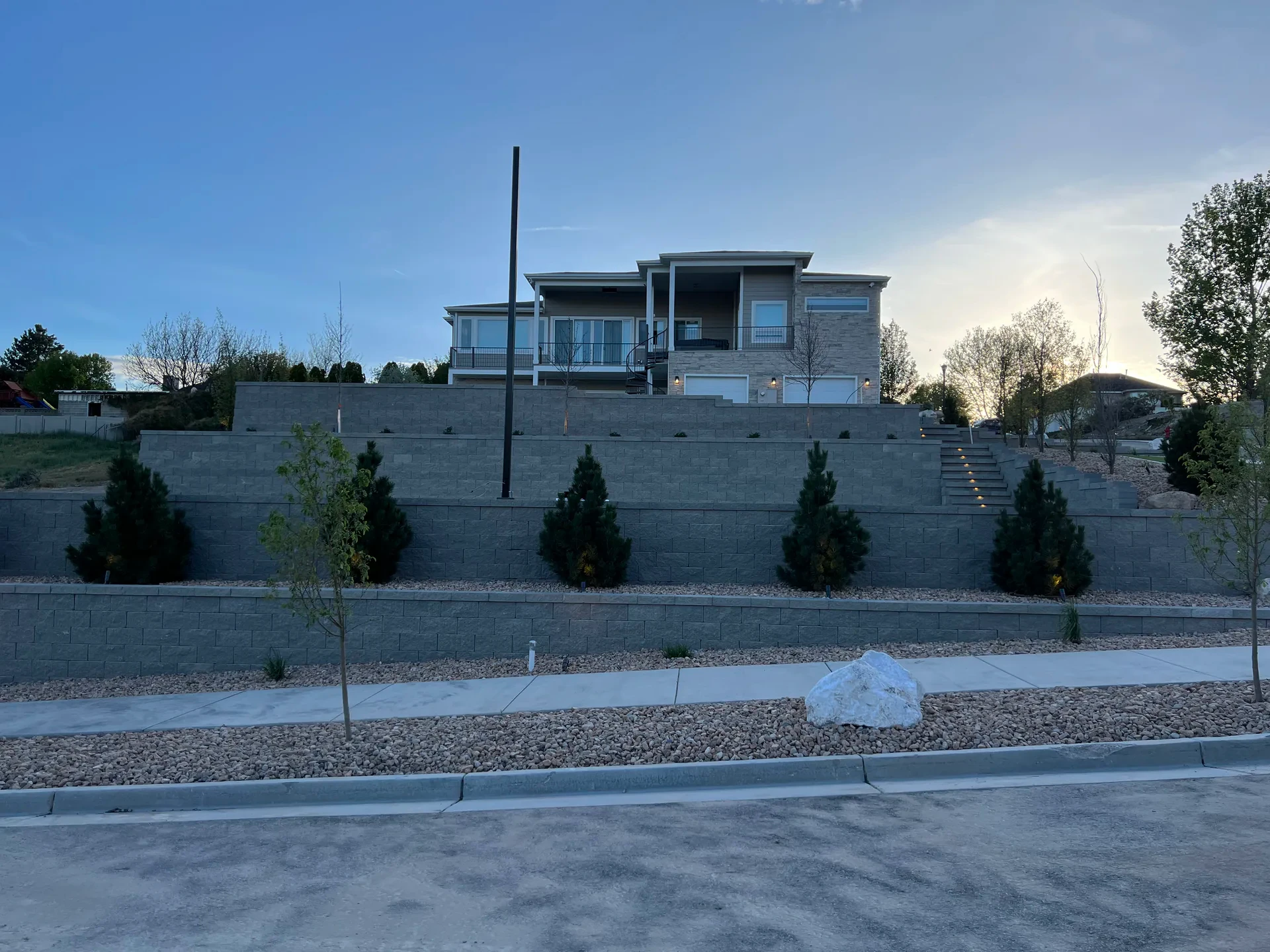
A concrete recreational court is a major site-work project. Black Diamond handles the full scope — grading, drainage, foundation, perimeter hardscapes, and landscape integration — so the finished court fits your property and holds up through Utah winters.
What Black Diamond builds
A residential multi-use recreational court typically includes a concrete slab foundation, perimeter fencing, and a painted or coated playing surface. Black Diamond performs the site preparation, grading, drainage, concrete flatwork, and surrounding landscape construction. Specialty court surfacing — the painted acrylic or sport-tile layer — is installed by a separate court surfacing contractor after the concrete cures.
That distinction matters for your project: Black Diamond coordinates the full site scope so the concrete, drainage, retaining walls, and landscape all work together. The court surfacing contractor works from a properly prepared, level, and drained slab.
What the project scope typically includes
Site assessment and design
Grade survey, drainage analysis, and layout planning to determine court orientation, elevation changes, and how the court integrates with the rest of the yard.
Excavation and grading
Cut and fill to establish a level court pad. Steep or sloped properties may require significant earthwork and equipment access planning.
Drainage and base preparation
Proper sub-base compaction and drainage slope are critical for concrete longevity in Utah's freeze-thaw climate. Black Diamond installs drainage as part of the foundation scope.
Concrete flatwork
4-inch minimum slab with control joints, reinforcement, and a broom or light-texture finish suited for court surfacing. Thickness and reinforcement are specified based on soil conditions and intended use.
Retaining walls and grade transitions
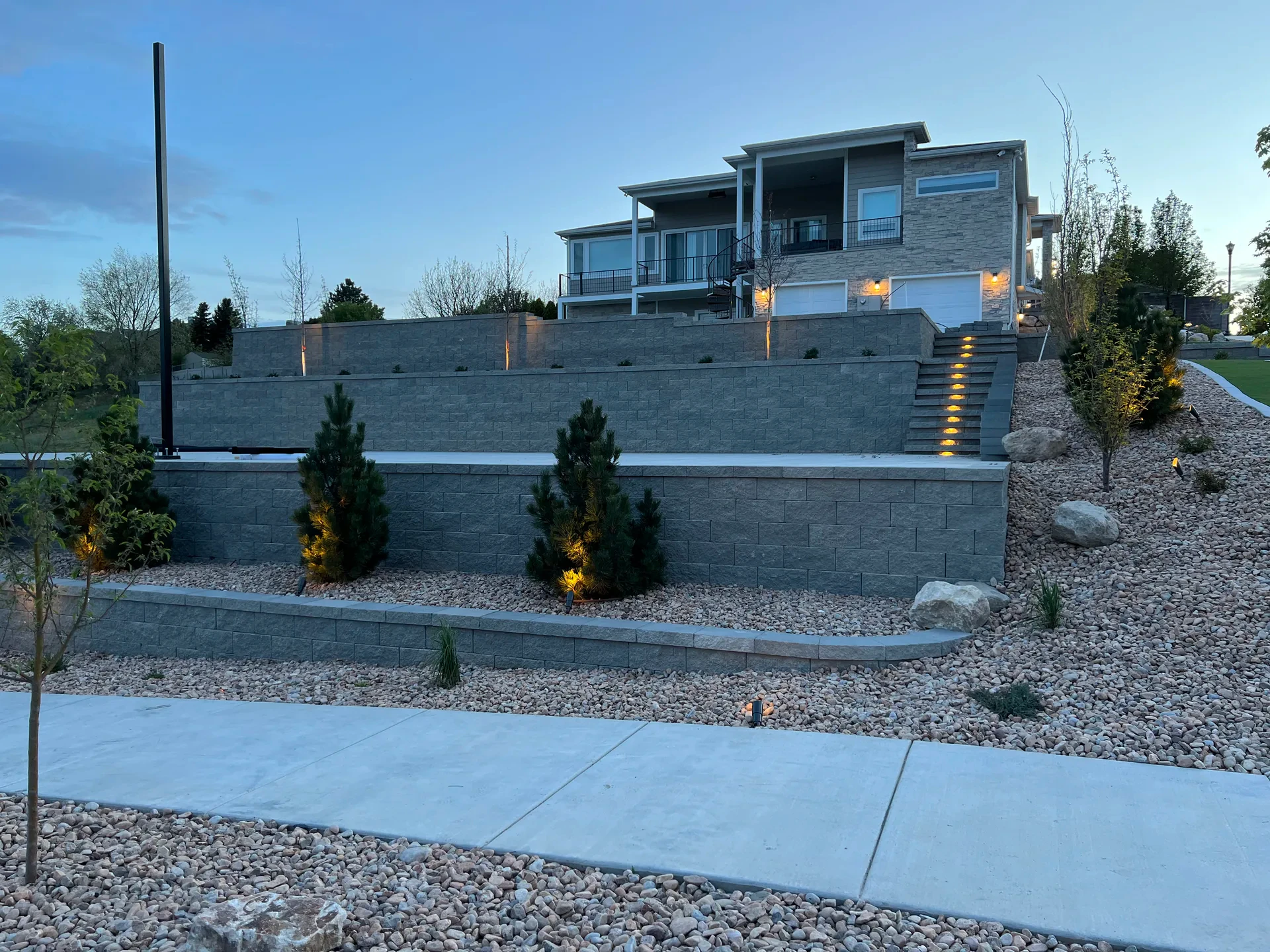
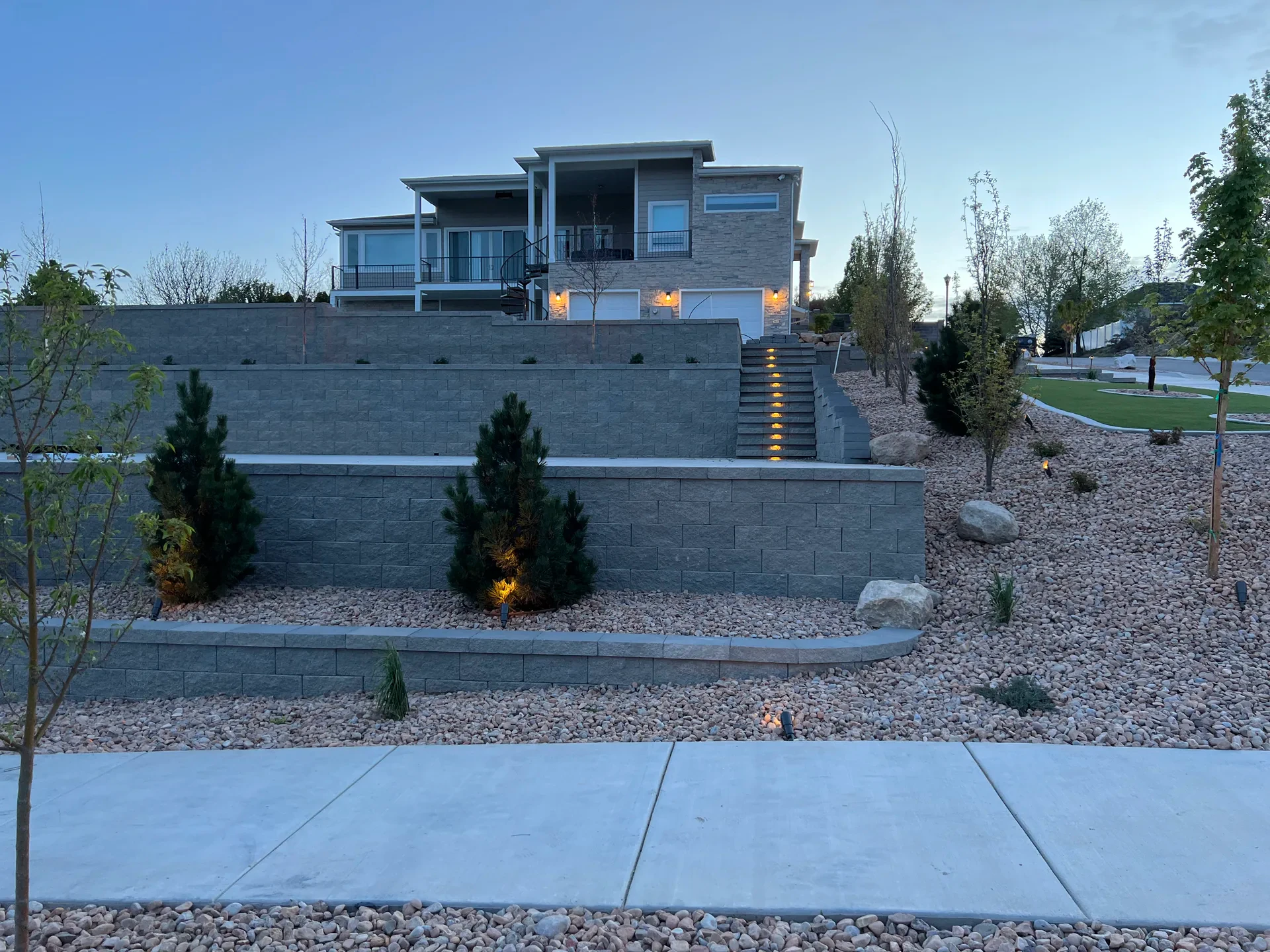
Courts on sloped properties often require retaining walls on one or more sides. Black Diamond builds engineered Belgard retaining wall systems that hold the court pad and integrate with the surrounding landscape.
Perimeter hardscapes and circulation
Concrete or paver pathways connecting the court to the home, patio, or other outdoor areas. Perimeter edging, step-downs, and transitions are designed as part of the overall yard plan.
Landscape lighting integration
Low-voltage FX Luminaire landscape lighting can illuminate the court perimeter, pathways, and surrounding planting for evening use. Lighting is designed and installed as part of the landscape scope.
Planting and turf
Surrounding planting beds, artificial turf, BioGrass sod, and decorative stone are installed after the court and hardscape are complete.
Utah site conditions that affect court construction
Salt Lake County properties present specific challenges for concrete court construction. Expansive clay soils, freeze-thaw cycles, and sloped lots all affect how a court is designed and built.
Drainage is the most common failure point on residential courts. Water that pools under or around the slab accelerates heaving and cracking. Black Diamond designs drainage into the base preparation and perimeter grading, not as an afterthought.
Retaining walls are often required on Wasatch Front properties where the yard slopes toward the house or drops away from it. Engineered wall systems rated for the retained height are required by Salt Lake County building code for walls over four feet.
Completed projects
Recreational courts in our portfolio
These completed projects include multi-use recreational courts built as part of larger landscape design-build scopes.
South Jordan Complete Landscape & Multi-Use Recreational Court
Full-property design-build in South Jordan — engineered Belgard retaining walls, concrete recreational court, artificial turf, fire feature, and FX Luminaire landscape lighting.
View South Jordan project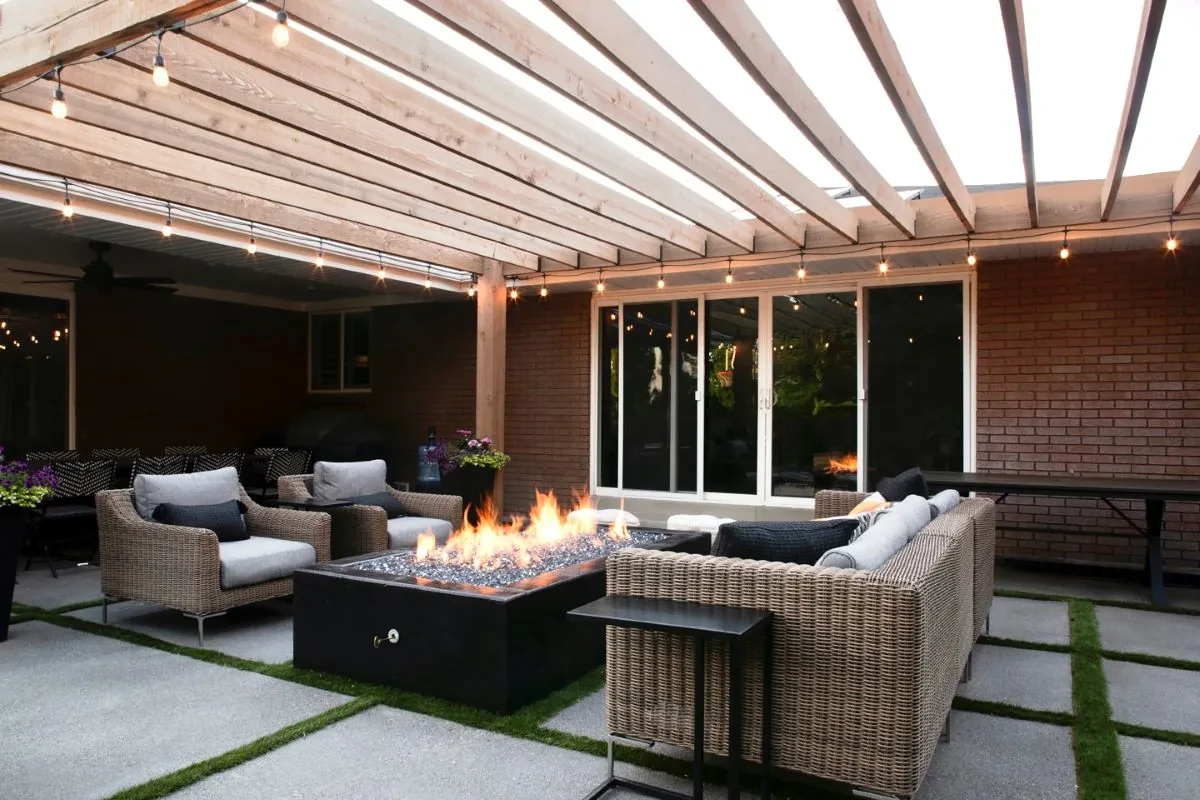
Millcreek Multi-Use Recreational Court, Pergola & Fire Feature
Complete Millcreek backyard renovation — multi-use recreational court, custom concrete patio, pergola, fire feature, raised garden boxes, hammock area, and landscape lighting.
View Millcreek projectCommon questions
Frequently asked questions
Does Black Diamond install the court surface — the painted lines and acrylic coating?
No. Black Diamond builds the concrete slab, drainage, retaining walls, and surrounding landscape. The painted acrylic or sport-tile playing surface is installed by a specialty court surfacing contractor after the concrete has cured. We can refer you to surfacing contractors we have worked with on past projects.
How long does a residential court project take?
Site preparation, concrete, and surrounding landscape typically take two to four weeks depending on the scope of earthwork and retaining walls required. Concrete needs 28 days to cure before surfacing. Total time from groundbreaking to a finished, surfaced court is typically six to eight weeks.
Do I need a permit for a residential concrete court in Salt Lake County?
A concrete slab for a recreational court generally does not require a building permit in Salt Lake County, but retaining walls over four feet do. Black Diamond handles permit coordination for retaining wall scopes as part of the project.
What size court fits a typical residential backyard?
A standard half-court basketball layout is 42 by 37 feet. A full pickleball court is 44 by 20 feet. Multi-use courts that accommodate both basketball and pickleball typically run 50 by 40 feet or larger. Black Diamond will survey your yard and recommend a layout that fits the available space and grade.
Can a court be added to a sloped backyard?
Yes, but it requires more earthwork and often retaining walls. Black Diamond has built courts on properties with significant grade changes in South Jordan, Millcreek, and Draper. The key is designing the drainage and retaining system before the concrete is poured.
What does a residential court project cost?
Costs vary significantly based on site conditions, earthwork required, retaining walls, and perimeter hardscapes. A straightforward court on a flat lot with minimal earthwork starts lower than a court requiring significant grading and engineered retaining walls. Black Diamond provides written project quotes after a site visit — we do not publish price ranges because site conditions vary too much to be useful without seeing the property.
Related services
Services that typically accompany a court project
Landscape Construction
Grading, excavation, and site preparation for complex residential projects.
Learn moreLandscape Lighting
FX Luminaire low-voltage lighting for courts, pathways, and perimeter areas.
Learn moreStart with a site consultation
Every court project starts with a site visit. Black Diamond reviews your property, discusses your goals, and provides a written scope of work covering all landscape and concrete construction. Court surfacing is quoted separately by the surfacing contractor.