
Sample image pending
Transcend® Lineage®
Biscayne
SunComfortable™WUI / fire-performance
50-year residential warranty
Trex and TimberTech composite and Advanced PVC decking — browse collections, compare colours, and see real Black Diamond installations across Utah.
Request a decking consultationDigital colors are a planning reference. Decking can vary by board and lighting conditions, and displays reproduce color differently. Compare a physical sample before final selection.
Plan your deck before you call
The Black Diamond Deck Planner walks you through size, features, and complexity in 5 steps — then hands off directly to a quote request. No email required.
The world's #1 decking brand — composite boards made from 95% recycled materials.
Six primary selections — representative of the full range. Every verified colour is available under Explore All Colours below.
Sample image pending
Transcend® Lineage®
50-year residential warranty
Sample image pending
Transcend® Lineage®
50-year residential warranty
Sample image pending
Transcend® Lineage®
50-year residential warranty

Transcend®
50-year residential warranty

Trex Island Mist composite decking installed at our Daybreak South Jordan project — compact backyard deck with hot-tub integration and artificial turf courtyard. Collection not yet confirmed.
Collection used on this project: unconfirmed (Lineage vs Transcend pending verification)
View projectSample image pending
Transcend®
50-year residential warranty
Transcend®
50-year residential warranty
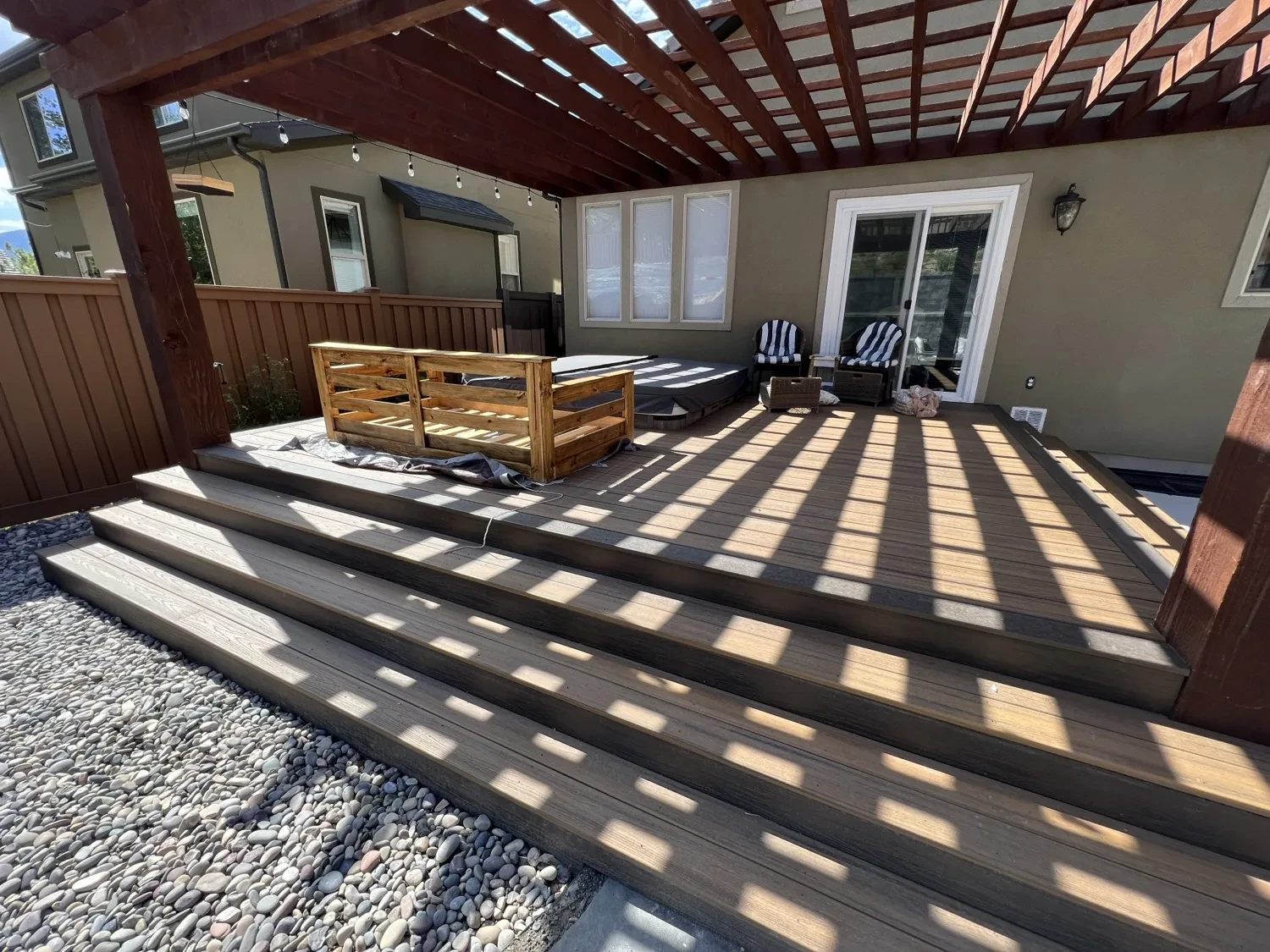
Spiced Rum picture-frame border paired with Havana Gold field decking — installed at our Suncrest Draper project alongside a cedar pergola, hot tub, and custom fire feature.
View projectSample image pending
Select®
35-year residential warranty
SunComfortable™ note: All decking can become hot in direct sunlight. Darker colors generally become hotter.
Every verified collection and colour — expand a collection to browse.
PVC
Composite
Trex's premium composite collection. All seven Lineage colors carry SunComfortable™ designation and WUI/fire-performance classification.
Sample image pending
Transcend® Lineage®
50-year residential warranty
Transcend® Lineage®
50-year residential warranty
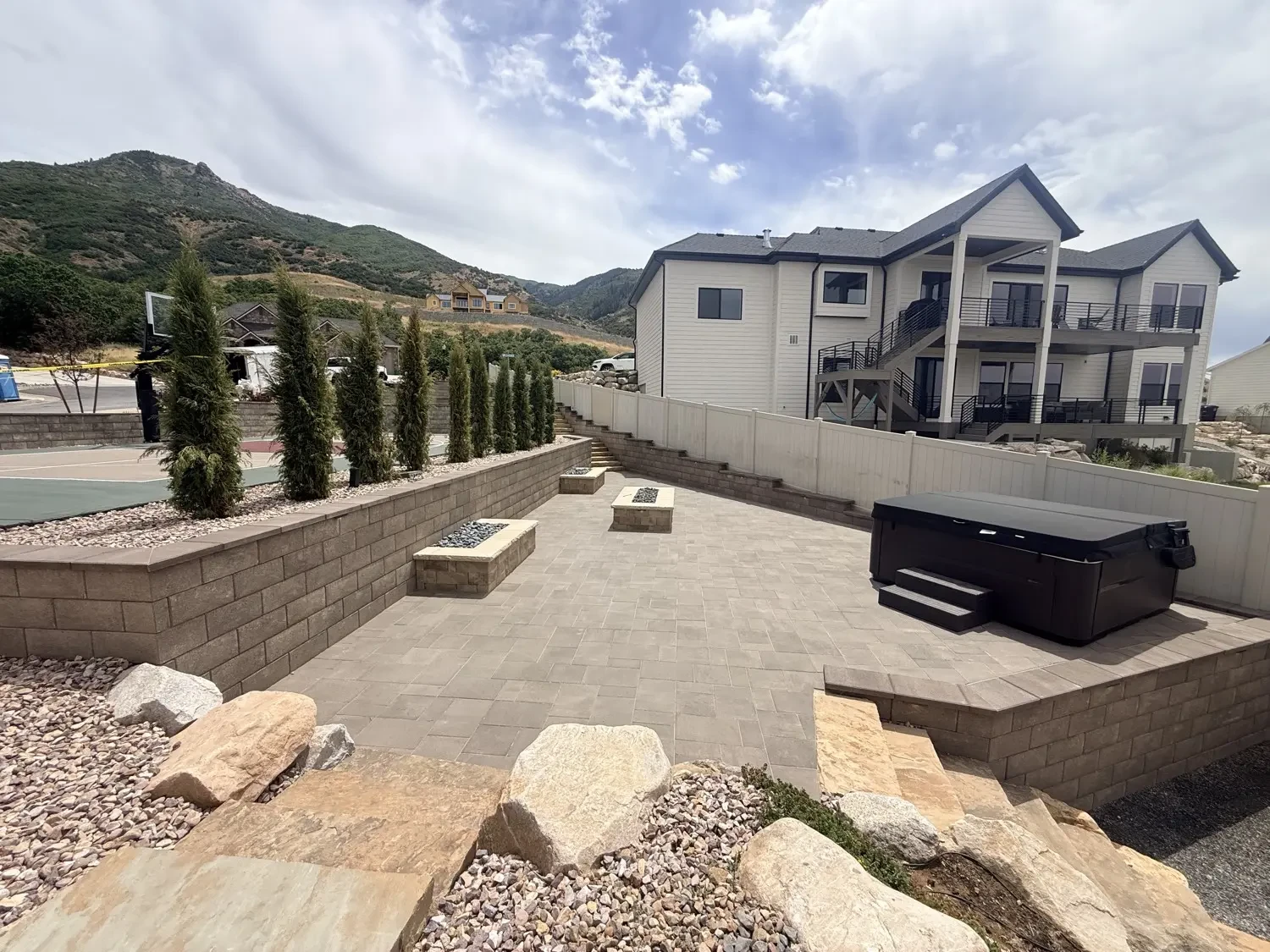
Trex Transcend Lineage Carmel — SunComfortable™ decking with WUI/fire-performance classification, installed alongside a post-tension sport court and Belgard hardscape system in Layton, Utah.
View projectSample image pending
Transcend® Lineage®
50-year residential warranty
Sample image pending
Transcend® Lineage®
50-year residential warranty
Sample image pending
Transcend® Lineage®
50-year residential warranty
Sample image pending
Transcend® Lineage®
50-year residential warranty
Sample image pending
Transcend® Lineage®
50-year residential warranty
Planning an elevated deck? Trex RainEscape® creates a dry-space system beneath the deck, protecting the area below from rain and moisture.
These confirmed Black Diamond projects demonstrate specific decking colours in real Utah outdoor-living environments.
Carmel — Trex Transcend Lineage®
Layton Sport Court & Outdoor Living
SunComfortable™ · WUI/fire-performance · 50-year warranty
View projectCoastline — TimberTech Vintage® Advanced PVC
Millcreek Complete Landscape Renovation
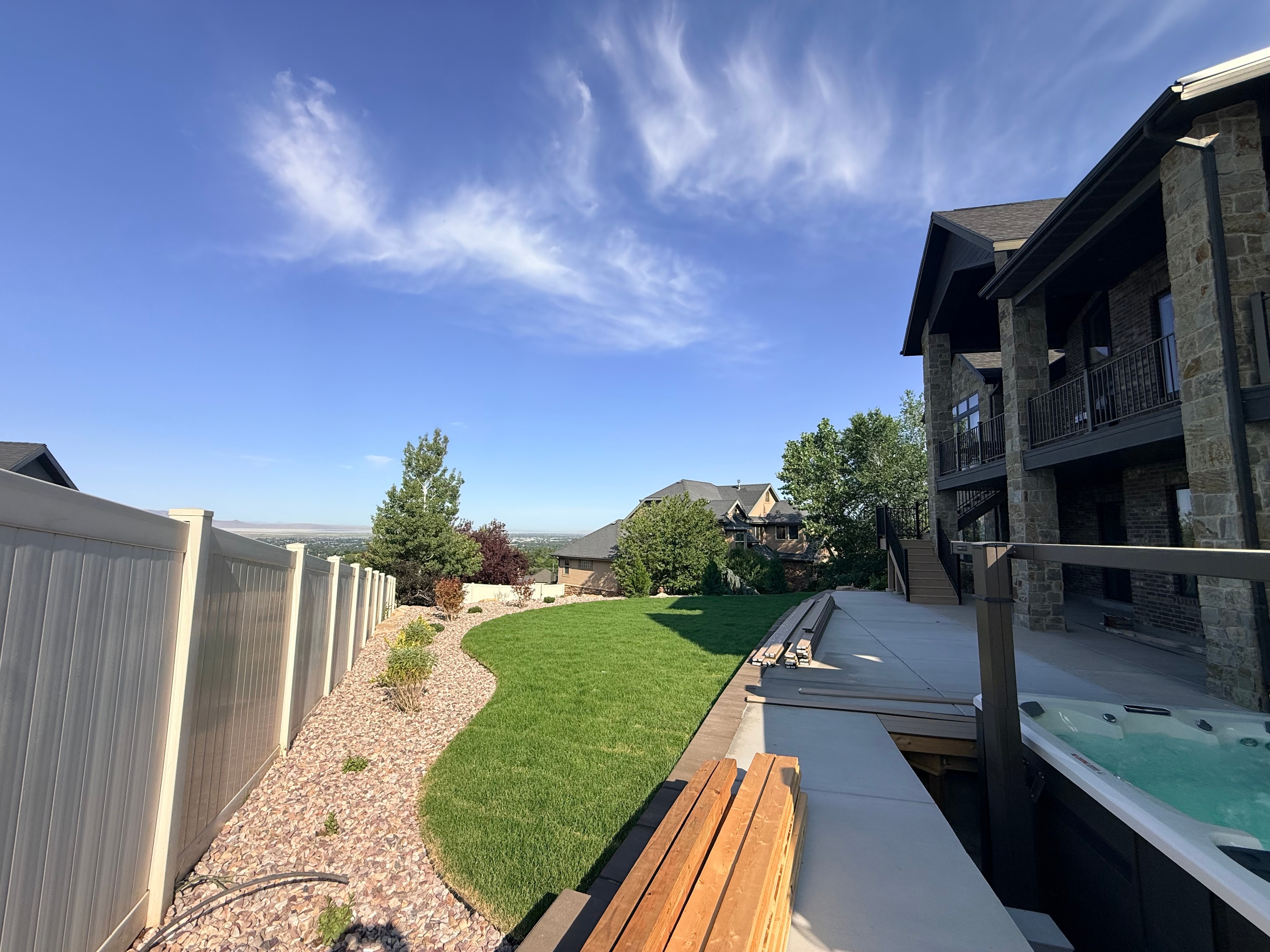
Multi-level hillside deck — light-gray Advanced PVC with black aluminum railing, stairs, and stone-step handoff. Owner-confirmed installation.
View projectHavana Gold + Spiced Rum — Trex Transcend®
Suncrest Draper Landscape Renovation
Two-color installation — Havana Gold field with Spiced Rum picture-frame border
View projectIsland Mist — Trex
Daybreak South Jordan — Deck & Hot Tub
Deck and hot-tub setting · Collection to be confirmed
View projectFirst-party photography from Black Diamond Landscape installations across the Salt Lake Valley. Color and collection unattributed.


Black Diamond installs Trex and TimberTech decking as part of complete outdoor-living projects across the Salt Lake Valley and Utah County.
Black Diamond answers to the questions Utah homeowners ask most often about Trex and TimberTech decking.
Composite decking combines polymer materials with wood-based content — typically reclaimed wood fiber and plastic. The wood fiber contributes to the board's natural appearance and texture, but it also means the material can respond to moisture and temperature differently than a fully synthetic product.
TimberTech Advanced PVC collections — Vintage, Landmark, and Harvest+ — use fully synthetic PVC construction with no wood fiber at all. That difference in composition affects how the board handles moisture exposure, how it behaves in wet or pool-adjacent applications, its weight, and how it responds to heat.
Neither material is universally better. The right choice depends on the specific project: the site conditions, the application, the aesthetic goals, and how the deck will be used. We evaluate both options on every project where decking is part of the scope.
There is no single answer — the right material depends on the project. Here is how we think through it:
Sun exposure and shade matter. A south-facing deck in full Utah summer sun behaves differently than a covered or shaded deck. Color selection and material type both affect surface temperature.
Elevation and climate zone matter. A deck at 5,000 feet in a WUI zone has different fire-performance requirements than a deck in a lower-elevation suburban yard.
Spa and pool proximity matter. For decks immediately adjacent to a hot tub, pool, or water feature, the moisture resistance of a fully synthetic Advanced PVC product is worth evaluating alongside composite options.
Appearance and physical samples matter. Screen colors are planning references only. The way a board looks in person — its texture, grain depth, and color variation — is something you can only evaluate with a physical sample.
Budget tier matters. Composite and Advanced PVC collections span a range of price points. We discuss options at different tiers as part of the planning conversation.
Structural design matters. The framing, span, and footing design are determined by the load requirements and site conditions — not by which surface board is chosen.
Black Diamond selects the decking system based on the project rather than defaulting to one material category. If you are planning a deck, the Deck Planner is a good starting point for thinking through the scope before we meet on site.
Yes. Any deck surface exposed to direct Utah summer sun will become hot — composite, Advanced PVC, wood, or concrete. This is not a defect; it is a physics reality.
Darker colors absorb more solar energy and generally become hotter than lighter colors. A dark espresso-toned board in full afternoon sun will be noticeably warmer underfoot than a light gray or tan board in the same conditions.
Some current products include heat-mitigating technologies. Trex Transcend Lineage, for example, carries SunComfortable™ designation across all seven colors. Trex itself notes that even SunComfortable boards can become hot in direct sunlight — the technology reduces heat buildup compared to earlier Trex boards, but it does not eliminate it.
Shade, orientation, and color all matter. A pergola, shade sail, or covered structure over part of the deck changes the experience significantly. East-facing decks that receive morning sun but are shaded by afternoon are generally more comfortable than west-facing decks that absorb peak afternoon heat.
If heat comfort is a priority for your project, we discuss color selection, shade structure options, and material choices together — not as separate decisions.
SunComfortable™ designation is collection-specific and color-specific — not a brand-wide Trex claim. The current approved catalog data is the source of truth for which colors carry the badge.
All seven Transcend Lineage colors carry SunComfortable™ designation. Three of the five Transcend colors carry it. Three of the six Select colors carry it. Two of the four Enhance Basics colors carry it.
Colors within the same collection that do not carry SunComfortable™ designation are not covered by that claim, regardless of how they look on screen.
Trex itself qualifies SunComfortable™ with the note that all decking can become hot in direct sunlight and darker colors generally become hotter. We apply the same qualification whenever we discuss heat performance.
If you want to know whether a specific color carries SunComfortable™ designation, the color cards on our Composite Decking page show the badge where it applies.
We do not declare a winner on this question, and here is why that matters.
Both Trex and TimberTech publish heat-performance information for certain products. But those claims come from different products, different colors, different test methodologies, and different comparison baselines. Applying a headline number from one manufacturer's test to a different manufacturer's product produces a comparison that was never actually made.
What we do instead: we evaluate the specific collection, the specific color, the site's sun exposure, and how the deck will be used. A lighter-colored Advanced PVC board in a shaded application and a darker composite board in full afternoon sun are not comparable by brand alone.
If heat comfort is a priority for your project, bring it into the planning conversation early. Color selection, shade structure, and material choice all contribute to the outcome — and they work better when planned together.
Moisture resistance is one factor — but it is not the only one, and the surface board is not the whole story.
For applications immediately adjacent to a pool, hot tub, or water feature, a fully synthetic Advanced PVC product is worth evaluating. TimberTech Advanced PVC collections have no wood fiber, which means the board itself does not absorb water or support mold growth in the way a wood-composite product can. That said, the framing, drainage, flashing, and ventilation design matter just as much as the surface board for the long-term performance of the assembly.
Drainage planning matters from the start. Water that pools on the deck surface, collects against the house, or saturates the framing creates problems regardless of what the boards are made of. We design the drainage and framing as part of the deck scope — not as an afterthought.
Our Daybreak South Jordan project shows a Trex composite deck with the hot tub integrated flush with the deck surface — the spa sits inset into the deck rather than placed on top of it. The deck uses Trex in Island Mist; the exact collection (Lineage or Transcend) remains under verification from the project record.
If you are planning a deck around a hot tub or pool, the Deck Planner includes a spa/pool question that helps us understand the scope before we meet on site.
WUI stands for Wildland-Urban Interface — the zone where developed residential areas meet or intermingle with undeveloped wildland vegetation. In Utah, a significant portion of the Wasatch Front falls within or adjacent to WUI zones, and local jurisdictions may require or recommend building materials that meet specific fire-performance standards.
WUI compliance and flame-spread classifications are product-specific and collection-specific — not brand-wide claims. TimberTech's published fire performance data, for example, lists Vintage and Landmark Advanced PVC as WUI compliant, Class A flame-spread rated, and ignition resistant. Other TimberTech collections carry different classifications. Trex Transcend Lineage and Transcend carry WUI/fire-performance classification. Other Trex collections do not.
If your property is in a WUI zone or your jurisdiction has specific fire-performance requirements for decking, we evaluate the exact collection and product specification against those requirements — not a general brand claim.
Flame-spread ratings describe how quickly fire travels across a material's surface under standardized test conditions. Class A is the most restrictive — materials in this category have the lowest measured flame-spread index. Class B and Class C represent progressively less restrictive performance thresholds.
For decking, Class A is the rating associated with WUI compliance and ignition-resistant classifications in many jurisdictions.
A few important qualifications: flame-spread ratings describe the surface board under test conditions — they do not describe the performance of the entire deck assembly, the framing, the connection to the house, or the surrounding landscape. A Class A deck board does not make a home wildfire-safe. Applicable code, jurisdiction requirements, assembly design, and exact product specification all still matter.
If fire performance is a factor in your project, we discuss the specific product, the applicable code requirements, and the full assembly design together.
Both systems address the same problem — keeping the space below an elevated deck dry — but they do it from different positions in the assembly.
Trex RainEscape is an above-joist system. Troughs and downspouts are installed between the joists, above the framing, before the decking goes down. Water that falls on the deck surface is collected in the trough system and routed away through downspouts before it ever reaches the space below. Trex publishes a 25-year limited residential warranty on RainEscape.
TimberTech DrySpace is an under-deck system. It is installed below the decking and joist area, collecting water that passes through the deck surface and routing it away from the space below. TimberTech publishes a 25-year limited residential warranty on DrySpace.
The two systems are not interchangeable. The right approach depends on whether the deck is new construction or an existing structure, the framing configuration, and what the homeowner wants to do with the space below. For new construction, the above-joist approach of RainEscape integrates more cleanly into the framing design. For an existing elevated deck, DrySpace may be the more practical retrofit option.
If you are planning an elevated deck with usable space below, include that in the scope conversation from the start.
Composite and Advanced PVC decking are low-maintenance — not maintenance-free. That distinction matters.
You will not need to sand, stain, seal, or paint a composite or PVC deck. The boards do not rot, splinter, or require the annual refinishing that wood decking does. That is a genuine and significant reduction in ongoing maintenance compared to natural wood.
What you will need to do: clean the deck periodically. Dirt, pollen, organic debris, and mildew can accumulate on any outdoor surface. Most manufacturers recommend periodic cleaning with soap and water, and some situations — particularly shaded decks with limited airflow — may require more attention to prevent surface mildew.
Manufacturer care requirements vary by collection and product. We recommend reviewing the specific care guidelines for the product you choose and following them. Warranty coverage can be affected by improper care or cleaning products.
Warranty length and coverage differ by collection and product family — there is no single number that applies across either brand.
For Trex: Transcend Lineage and Transcend carry 50-year residential warranties. Select carries a 35-year warranty. Enhance Naturals and Enhance Basics carry 25-year warranties.
For TimberTech: Advanced PVC collections — Vintage, Landmark, and Harvest+ — generally carry 50-year residential warranties. Composite collections vary by product family.
Warranty coverage details, exclusions, and transferability terms are set by the manufacturer and control over any summary we provide. We recommend reviewing the specific warranty documentation for the collection you are considering before making a final selection.
Color selection for a full-sun Utah deck involves more than personal preference — it affects how the deck performs and how it looks alongside the rest of the outdoor space.
Lighter colors generally absorb less heat than darker ones. On a south-facing deck that receives direct afternoon sun from June through August, a lighter warm gray or tan board will be noticeably more comfortable underfoot than a deep espresso or charcoal tone. That does not mean darker colors are wrong — it means the tradeoff is worth understanding before you choose.
Architecture and house color matter. A deck that reads as an extension of the house benefits from colors that complement the exterior — siding, trim, stone, and brick. We look at the full palette of the outdoor space, not just the deck boards in isolation.
Retaining walls and pavers matter. If the deck connects to or is adjacent to Belgard pavers or natural stone, the color relationship between the deck surface and the hardscape affects the overall composition.
Railing matters. The railing color and material — black aluminum, white composite, cable — changes how the deck board color reads from a distance and up close.
Shade structures matter. A pergola or covered structure over part of the deck changes both the heat performance and the visual character of the space. A darker board under a pergola may be perfectly comfortable.
Physical samples are essential. Screen colors are planning references only. The texture, grain depth, and color variation of a composite or PVC board can only be evaluated in person. We have Trex and TimberTech samples available at our Murray location.