
Outdoor Living & Water Efficiency
Water-Wise Outdoor Living That Still Looks Premium

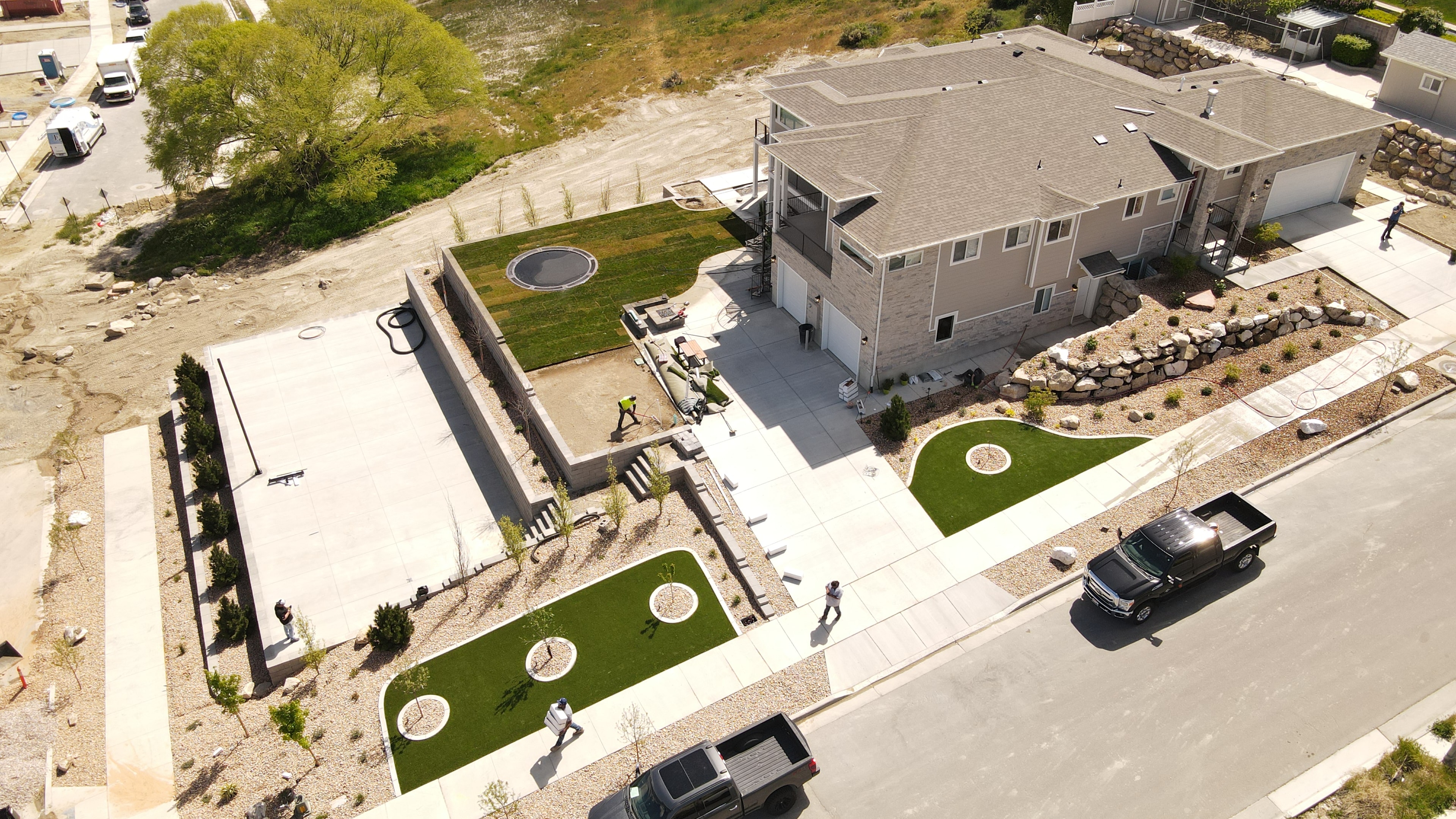
South Jordan backyard renovation — artificial turf panels, Belgard paver patio, retaining walls, and drip-irrigated planting beds.
Key takeaways
- A water-wise outdoor living space and a premium-looking one are not in conflict — the hardscape carries the visual weight while water-efficient planting supports it.
- Belgard pavers, natural stone, and concrete provide a premium appearance with no ongoing water demand; a well-executed patio with a fire feature reads as a high-end outdoor room regardless of how much turf surrounds it.
- Artificial turf can be considered for defined-use areas — a putting green, a play area, a framed lawn panel — where it fits the design, use pattern, drainage, and site conditions. It is not eligible under the Utah Water Savers landscape incentive programs reviewed in Black Diamond's rebate guide.
- Hydrozoning and drip irrigation to planting beds allow precise water delivery; smart controllers adjust run times based on weather data rather than a fixed schedule.
- Recirculating water features reuse their operating water, but evaporation, splash loss, basin design, sun and wind exposure, and maintenance still affect overall water use — they are not inherently water-efficient in all installations.
- Shade structures reduce heat load on adjacent planted areas, which can lower their water demand in Utah's high-desert climate.
The false choice between water-wise and premium
Utah homeowners are often told they must choose: either a lush, premium outdoor space or a water-efficient one. That framing is wrong. The real question is where water is used, not how much.
A well-designed outdoor living environment — patio, fire feature, pergola, planting beds — can be both water-efficient and visually premium. The key is applying water-wise principles to the planted areas while designing the hardscape and structure to carry the visual weight of the space.
Hardscape does the heavy lifting
In a water-wise outdoor living design, the hardscape — patio surface, retaining walls, steps, edging, and built-in features — provides the visual richness that lawn and dense planting would otherwise supply. Belgard pavers, natural stone, and concrete all deliver a premium appearance without any ongoing water demand.
A well-executed paver patio with a fire feature, integrated seating walls, and defined planting beds reads as a high-end outdoor room regardless of how much turf surrounds it. The structure carries the design; the planting supports it.
Artificial turf: where it works and where it does not
Artificial turf is one of the most effective tools in a water-wise outdoor living design when it is used in the right locations. Defined lawn panels — a putting green, a play area, a framed lawn panel between patio and planting beds — read as intentional design elements rather than substitutes for real grass.
Where artificial turf underperforms is when it is used as a blanket replacement for an entire yard without design structure around it. Turf surrounded by well-designed hardscape and planting looks premium. Turf alone, without context, does not.
Black Diamond has installed artificial turf panels in South Jordan, Emigration Canyon, and West Jordan as part of complete outdoor living renovations. In each case, the turf was framed by Belgard hardscape, retaining walls, or planting beds — not used as a standalone solution.
Planting that supports the design without demanding water
The planted areas in a water-wise outdoor living space serve a specific role: they soften the hardscape, add seasonal color, and provide privacy or enclosure where needed. They do not need to be the dominant visual element.
Utah-adapted plants — ornamental grasses, native perennials, low-water shrubs — can provide genuine visual interest through texture, color, and seasonal change without the water demand of traditional lawn or dense annual planting. The selection should match the microclimate of the specific area: sun exposure, drainage, and proximity to hardscape all affect what will perform well.
Hydrozoning — grouping plants by water need and running separate irrigation zones for each group — is the irrigation practice that makes this work. Drip irrigation to planting beds, separate from any turf zones, allows precise water delivery and prevents overwatering.
Fire features and water features in a water-wise context
Fire features — gas fire pits, fire bowls, linear fire features — are inherently water-wise. They add significant visual and functional value to an outdoor living space with no water demand at all. A well-positioned fire feature extends the usable season of an outdoor space and anchors the design.
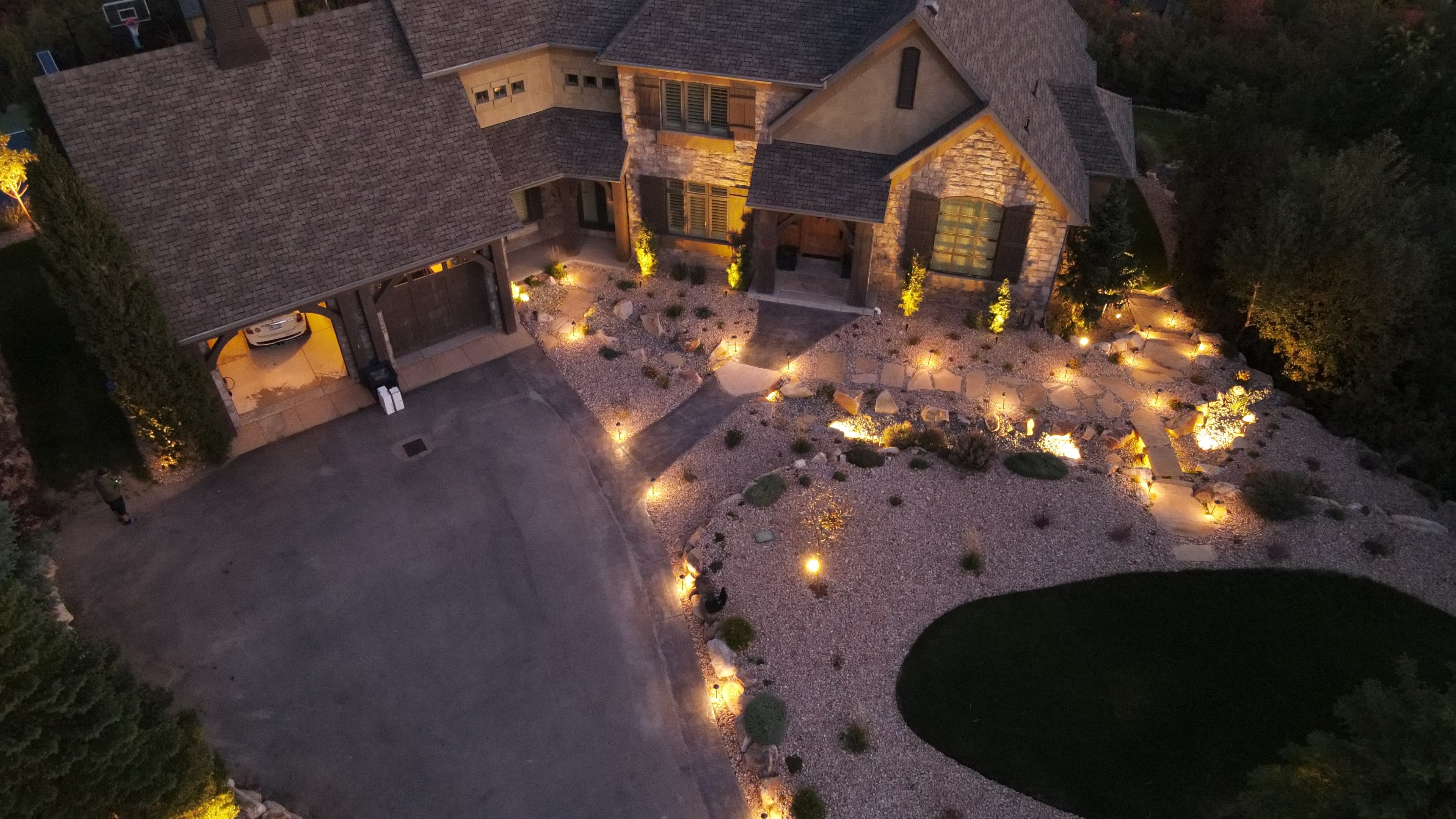
Recirculating water features — pondless waterfalls, spillway bowls, bubbling boulders — use a closed water loop and consume very little water compared to irrigation. They add sound and movement to the space and are compatible with a water-wise design approach. Black Diamond has installed recirculating water features in Draper, Sandy, and South Jordan as part of complete outdoor living projects.
Structures: pergolas, pavilions, and shade
Shade structures — pergolas, pavilions, shade sails — reduce the heat load on the outdoor living area and on adjacent planted areas. In Utah's high-desert climate, shade can meaningfully reduce the water demand of plants growing beneath or near a structure.
A pergola over a patio also defines the outdoor room, adds architectural interest, and extends the usable hours of the space on hot summer days. It is a structural investment that pays dividends in comfort, aesthetics, and reduced plant water demand.
Irrigation: the system behind the design
A water-wise outdoor living space requires a properly designed irrigation system — not simply a reduced one. The goal is to deliver the right amount of water to the right areas, not to underwater everything and hope for the best.
Smart irrigation controllers — weather-based systems that adjust run times based on evapotranspiration data — are the most effective tool for reducing outdoor water use without sacrificing plant health. Utah's Division of Water Resources and many local water utilities have offered rebate programs for qualifying smart controllers; homeowners should check with their specific provider for current availability.
Drip irrigation to planting beds, rotary nozzles on turf zones, and separate zones for different plant types are the practices Black Diamond applies on water-wise projects. The system is designed to the plant palette, not the other way around.
What a complete water-wise outdoor living project looks like
The South Jordan project Black Diamond completed included a full backyard renovation: Belgard paver patio, retaining walls, sport court, artificial turf panels, planting beds with drip irrigation, and a fire feature. The design was built around water efficiency from the start — not retrofitted after the fact.
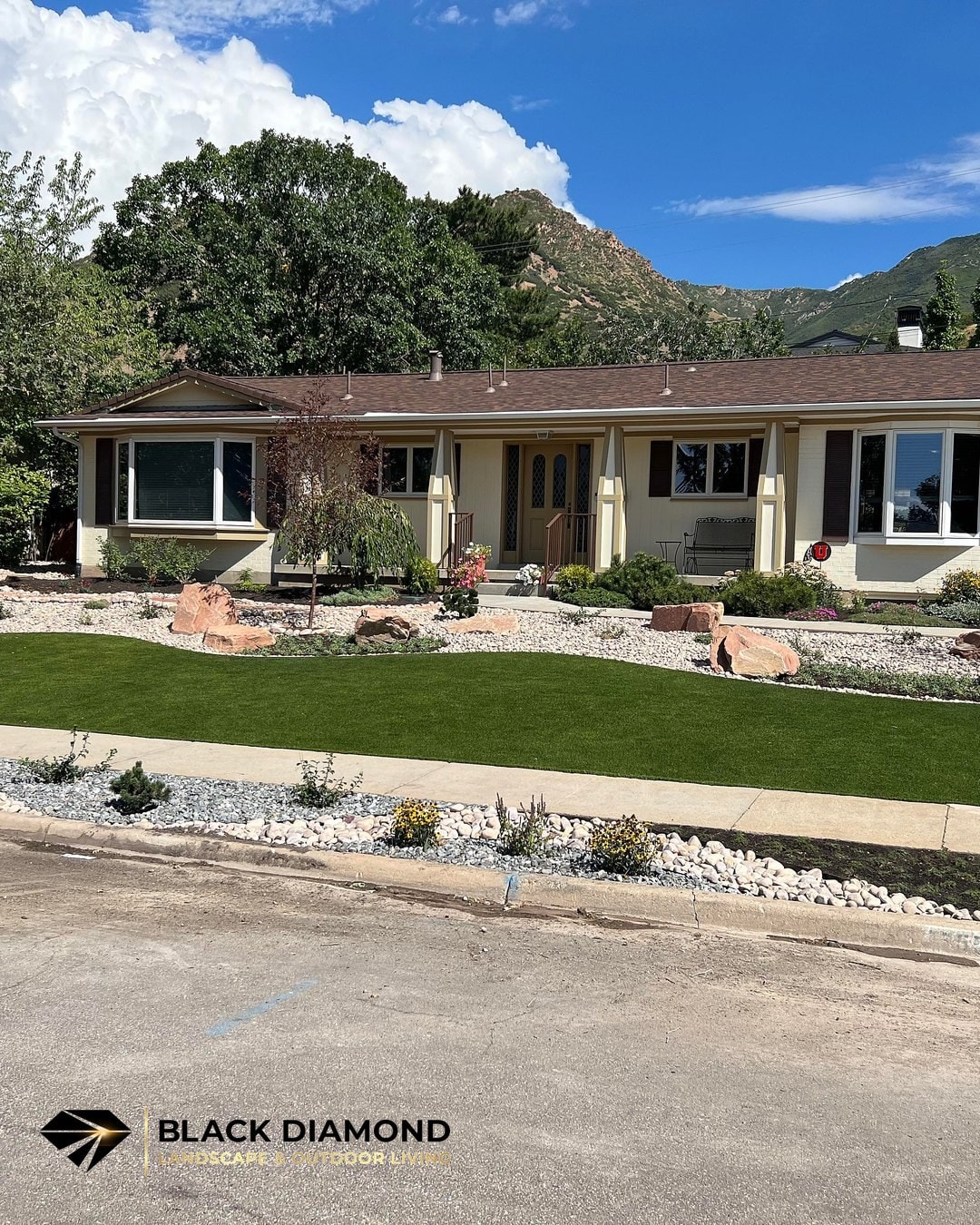
The Emigration Canyon front yard renovation replaced an existing sod lawn with artificial turf, flagstone pathways, river rock, and low-water planting beds. The result is a front yard that requires no irrigation on the turf areas and minimal drip irrigation on the planted areas.
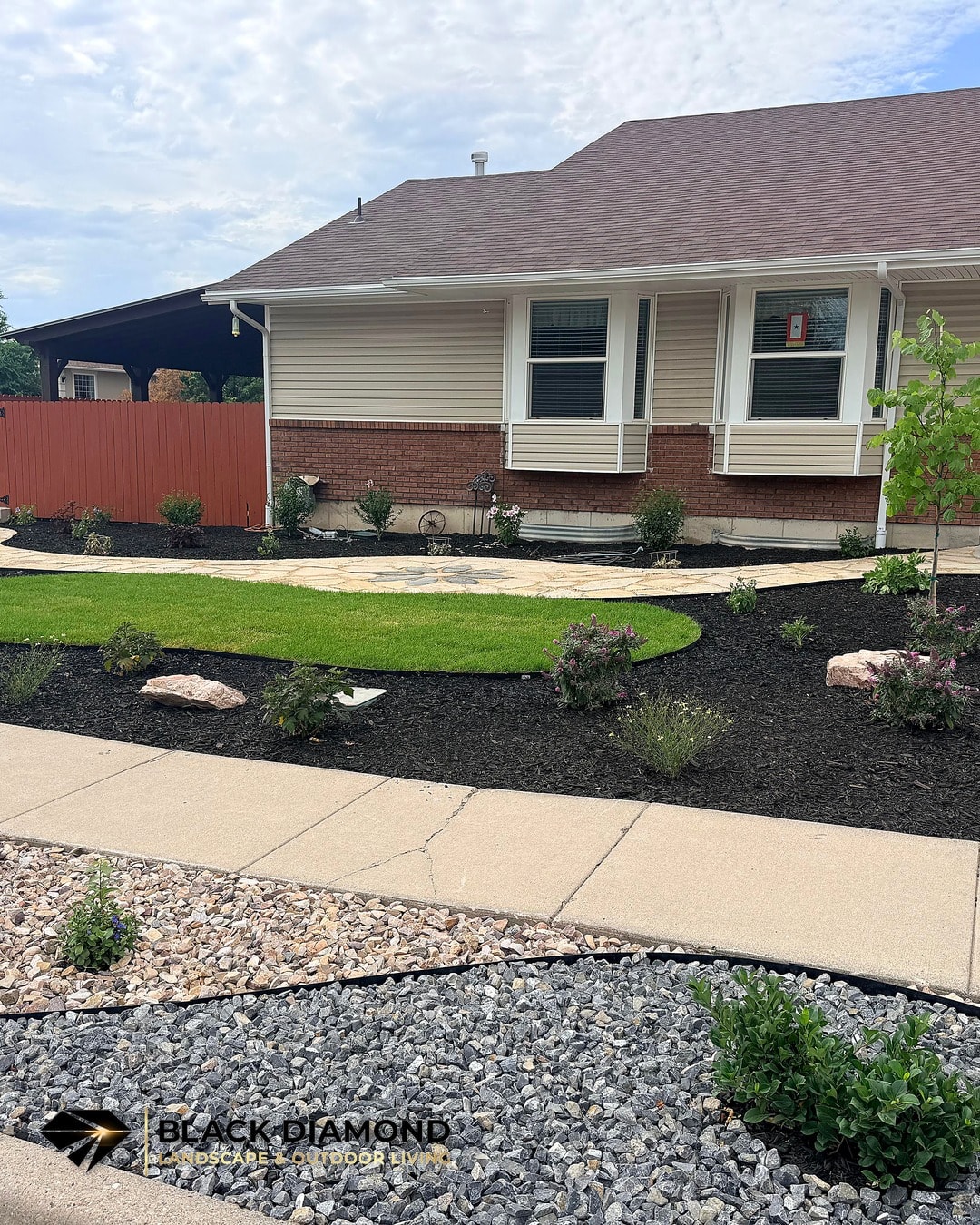
The West Jordan project converted a traditional front lawn to a flagstone walkway, planting beds, and a water-wise rock strip. The design maintained curb appeal and neighborhood context while eliminating the majority of the irrigation demand.
Project photography
Related pages
- Outdoor living design and construction
- Irrigation systems and water-wise landscaping
- Hardscape design and installation
- Landscape design services
- Project portfolio
- Planning a water-wise landscape for Utah's semi-arid climate
- Water-Wise Plants for Utah — Glover Nursery
- Utah Water-Wise Rebates — Slow the Flow
Ready to start
Design a water-wise outdoor space that looks the part.
Black Diamond designs and builds complete outdoor living environments across Salt Lake, Davis, Utah, and Summit counties. Contact us to discuss your project.