
Irrigation and Water-Wise
Planning a Water-Wise Landscape for Utah's Semi-Arid Climate
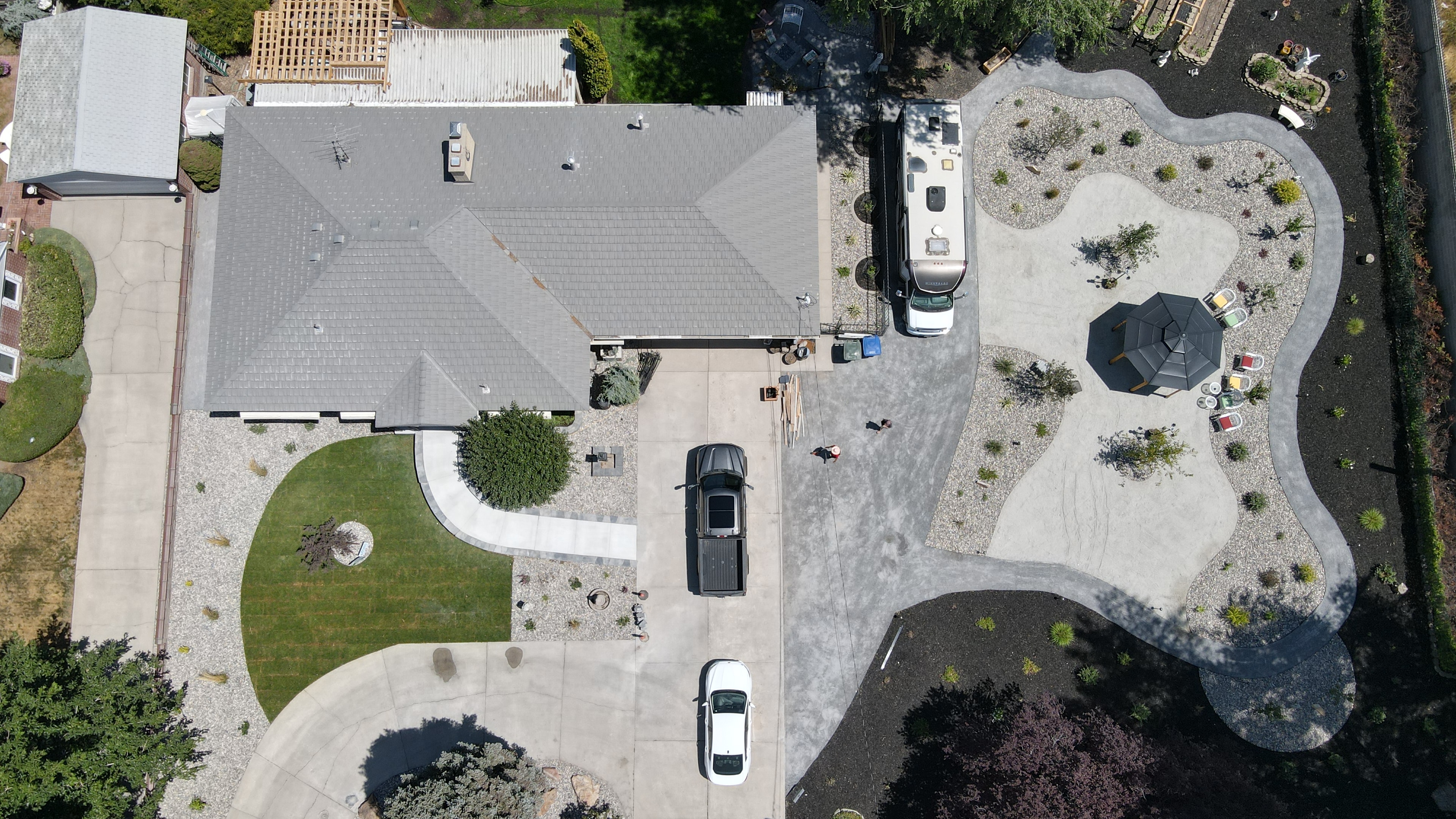
Water-wise does not mean lifeless
Utah's climate rewards landscapes designed around water efficiency. The challenge is creating an environment that is genuinely attractive, functional, and sustainable — not simply one that uses less water by using fewer plants.
A well-designed water-wise landscape can include lawn areas where they serve a purpose, shade trees, ornamental planting, and defined gathering spaces. The goal is to match plant selection and irrigation to the actual conditions of the property — not to eliminate everything that requires water.
Start with property conditions
Before selecting plants or designing an irrigation system, the property itself has to be understood. Soil type affects drainage and water retention. Slope affects runoff and erosion. Existing trees create shade that changes what will grow beneath them. Microclimates — areas that are consistently warmer, cooler, wetter, or drier than the surrounding landscape — affect plant performance in ways that a general plant list cannot account for.
A water-wise landscape that ignores site conditions will underperform regardless of how carefully the plants were selected.
Group plants by water needs
Hydrozoning is the practice of grouping plants with similar water requirements in the same irrigation zone. It is one of the most effective ways to reduce water use in a residential landscape.
When high-water and low-water plants share the same irrigation zone, the system has to be set to satisfy the highest-demand plant — which means the low-water plants receive more water than they need. Hydrozoning allows each zone to be scheduled independently, matching irrigation to actual plant requirements.
Irrigation and drip-system planning
Drip irrigation delivers water directly to the root zone of individual plants, reducing evaporation and runoff compared to overhead spray. It is particularly effective in planting beds, around trees, and in areas where spray irrigation would wet hardscape surfaces or structures.
Smart irrigation controllers — those that adjust scheduling based on weather data, soil moisture, or evapotranspiration rates — can significantly reduce water use compared to fixed-schedule systems. The controller is only as effective as the system it manages, however. A smart controller connected to a poorly designed system will still waste water.
Soil and planting preparation
Utah's native soils are often alkaline, compacted, and low in organic matter. Amending soil before planting improves water retention, drainage, and root development. The appropriate amendment depends on the soil type and the plants being installed.
Proper planting depth and technique also affect long-term plant health. A plant installed too deep, too shallow, or in soil that drains poorly will struggle regardless of how well the irrigation system is designed.
Shade, exposure, and microclimates
South and west-facing exposures in Utah receive intense afternoon sun and heat. Plants in these locations require more water than the same species planted on a north or east-facing slope. Structures, walls, and existing trees create shade that reduces water demand and moderates temperature.
Understanding the exposure and microclimate of each area of the property allows plant selection and irrigation design to be matched to actual conditions rather than general recommendations.
Lawn reduction versus lawn elimination
Lawn areas are among the highest water consumers in a residential landscape. Reducing lawn area — particularly in areas where it serves no functional purpose — is one of the most effective ways to reduce overall water use.
Lawn elimination is not always the right answer. Lawn areas that serve as play surfaces, gathering spaces, or visual relief in a larger composition have value that should be weighed against water use. The question is whether the lawn area is sized and located appropriately for how it is actually used.
Gravel, mulch, and surface-material decisions
Organic mulch applied to planting beds reduces evaporation, moderates soil temperature, and suppresses weeds. It breaks down over time and improves soil structure. Inorganic mulch — gravel, decomposed granite, crushed rock — does not improve soil but requires less maintenance and does not decompose.
Surface material decisions affect drainage, heat retention, and the overall character of the landscape. Gravel areas that replace lawn can reduce water use but may increase reflected heat in areas adjacent to structures or outdoor living spaces.
Drainage and grading
Water-wise landscapes depend on drainage that moves water away from structures and toward areas where it can be absorbed or managed. Poor grading that allows water to pond near foundations, walls, or planting areas creates problems that irrigation efficiency cannot solve.
Grading and drainage should be addressed as part of the landscape design — not as an afterthought after planting and hardscapes are installed.
Long-term maintenance
A water-wise landscape requires maintenance to remain water-wise. Irrigation systems need seasonal adjustment and periodic inspection. Plants need to be pruned, replaced when they fail, and managed to prevent overgrowth that shades out neighboring plants or encroaches on hardscape.
The maintenance requirements of a water-wise landscape are different from those of a traditional lawn-dominated landscape — but they are not absent. A landscape designed for low water use that is not maintained will not perform as intended.
Questions to ask during design
- What are the soil conditions and drainage patterns on this property?
- Which areas receive the most intense sun and heat?
- Where does lawn serve a functional purpose, and where can it be reduced?
- How will the irrigation system be zoned to match plant water requirements?
- What surface materials are appropriate for the climate and the intended use?
- How will drainage be managed across the property?
- What is the realistic maintenance commitment for this landscape?
Plan a Water-Wise Landscape
Tell us about your property, the areas you want to improve, and your water-use priorities. Our team will review the information and identify the appropriate next step.