
Project Planning & Professional Standards
The Bridge: Closing the Divide Between Homeowners and Contractors
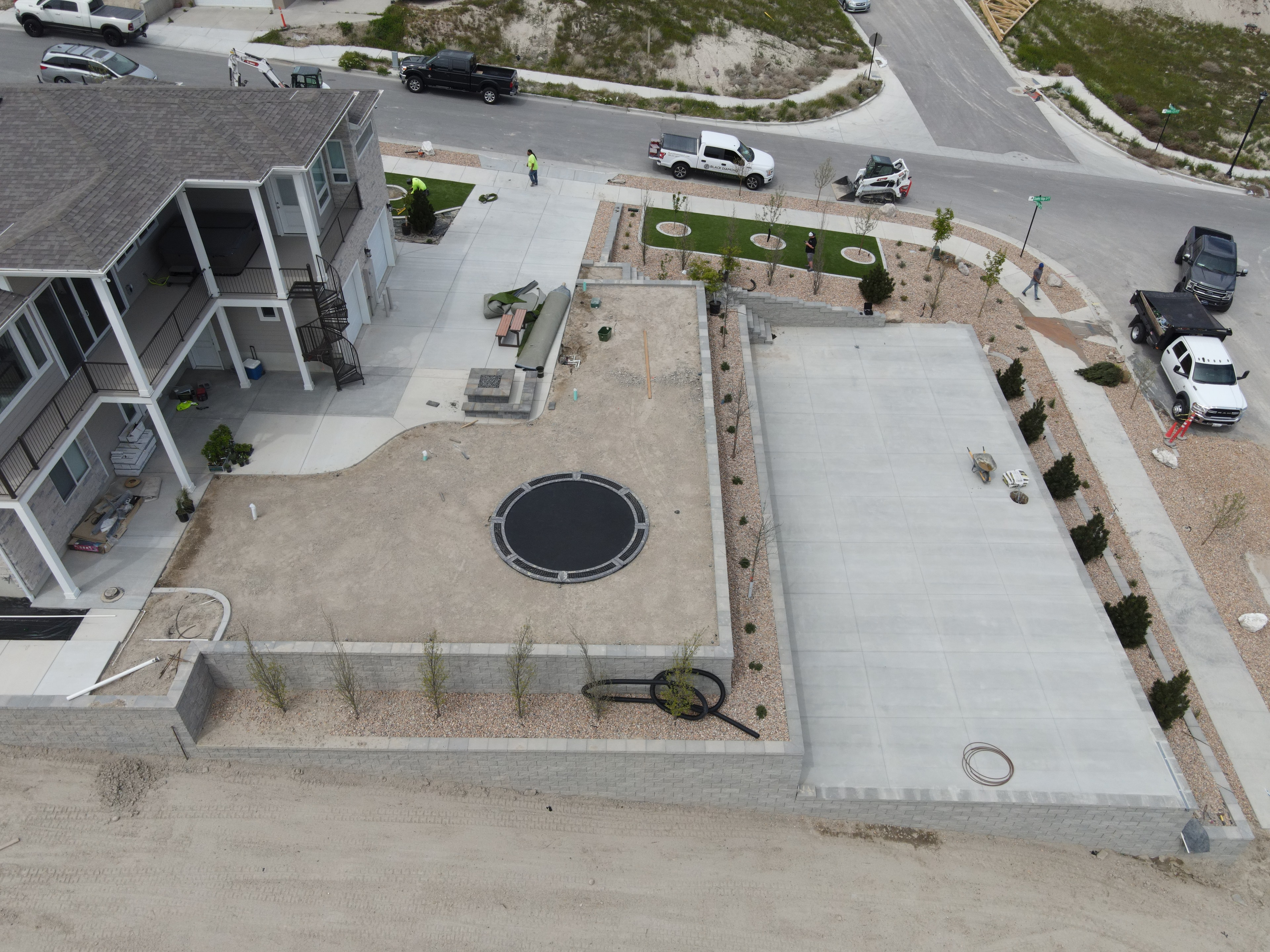
A successful construction project requires more than skilled labor, quality materials, and a signed contract. It requires trust between two parties who often enter the relationship with very different concerns.
The homeowner is trying to protect their investment, avoid being overcharged, and find the best value. The contractor is trying to accurately evaluate the project, manage risk, pay skilled employees, maintain equipment, carry insurance, honor warranties, and earn a reasonable profit.
Both sides want a successful outcome. Yet the process often becomes adversarial before the work even begins. That divide is the bridge our industry must learn to cross.
Why Homeowners Often Focus on Price
For most homeowners, a major landscape or outdoor-living project is a significant financial decision. They may be comparing proposals for work they have never purchased before and do not fully understand from a technical perspective.
Without a clear way to compare workmanship, project management, drainage planning, base preparation, warranty protection, or construction methods, homeowners often default to the easiest number to understand: the total price.
Price matters. Every client has a budget, and every professional contractor should respect it. The problem begins when the lowest price is treated as evidence of the best value.
Two proposals may appear to describe the same project while including completely different levels of planning, materials, preparation, supervision, protection, and long-term accountability. A lower proposal may reflect greater efficiency. It may also reflect:
- Missing work
- Unclear allowances
- Underestimated labor
- Inadequate site preparation
- Lower-grade materials
- Insufficient insurance
- Limited warranty protection
- Unqualified labor
- Intentional underbidding
- Future reliance on change orders
The lowest initial price is not always the lowest final cost.
Why Professional Contractors Cannot Compete on Price Alone
A legitimate construction company carries substantial costs before a crew arrives at a property. Professional contractors must account for:
- Licensed and insured operations
- Skilled and properly compensated team members
- Equipment ownership and maintenance
- Vehicles, fuel, and transportation
- Safety programs
- Estimating and project planning
- Scheduling and production management
- Office administration
- Client communication
- Quality-control inspections
- Accounting and job costing
- Warranty obligations
- Liability exposure
- Training and certifications
These costs are not added simply to increase a contractor's price. They are part of what allows the contractor to perform consistently and remain accountable after the project is complete.
A company cannot provide experienced supervision, detailed proposals, responsive communication, reliable schedules, qualified labor, and warranty support at the same cost as an operator who provides none of those things.
The client is not only purchasing labor and materials. The client is purchasing a professional system.
The Hidden Cost of a Complete Proposal
A sophisticated construction proposal may require far more work than a homeowner sees. Before preparing accurate pricing, a contractor may need to evaluate:
- Property access
- Existing grades
- Drainage conditions
- Soil conditions
- Utility conflicts
- Demolition requirements
- Material quantities
- Equipment access
- Irrigation modifications
- Retaining conditions
- Electrical requirements
- Permit considerations
- Construction sequencing
- Labor demands
- Disposal costs
- Site protection
- Project-specific risks
A detailed proposal may require site visits, measurements, vendor pricing, internal review, design coordination, and several rounds of revisions. That work has value even though physical construction has not started.
In many professional industries, clients expect to pay for expertise before receiving a complete solution. Architects, engineers, attorneys, accountants, physicians, surveyors, and consultants are regularly compensated for analysis, planning, and professional judgment.
Residential construction has often been treated differently. Contractors are frequently expected to inspect properties, solve technical problems, develop scopes, prepare budgets, and provide recommendations without compensation. That expectation creates an unhealthy model.
When preconstruction work is not compensated, the contractor must either absorb the cost, recover it somewhere else, limit the time invested, or treat the proposal as a sales exercise instead of a construction plan. None of those outcomes serves the homeowner well.
A Free Estimate Is Not the Same as Professional Preconstruction
Not every conversation should require a fee. A preliminary phone call, basic qualification discussion, or simple estimate for clearly defined work may reasonably be provided at no charge. However, complex projects often require a different level of service.
There is an important distinction between a preliminary estimate — a general evaluation based on limited information, assumptions, and an early understanding of the scope — and professional preconstruction: a structured process involving site investigation, design review, measurements, material selection, budgeting, risk identification, construction planning, and proposal development.
The more detailed, accurate, and project-specific the requested solution becomes, the more professional time is required to create it. Homeowners should not be asked to pay for vague promises. Contractors should not be expected to provide sophisticated planning for free.
The Problem With Intentional Low Bidding
Some contractors submit a low number because they have misunderstood the project. Others submit a low number because they know the homeowner is likely to select the least expensive proposal. Once the project begins, the missing costs may appear through:
- Change orders
- Reduced scope
- Material substitutions
- Delays
- Unplanned exclusions
- Labor shortcuts
- Quality problems
- Requests for additional payment
- Abandoned work
An intentionally low bid does not eliminate the true cost of construction. It simply delays when the client discovers it. A responsible contractor should price the work based on what is reasonably required to complete it correctly. A responsible homeowner should evaluate whether the proposal is complete, realistic, and supported by a defined process.
What Scope Creep Really Means
Scope creep occurs when the work gradually expands beyond the original agreement without corresponding adjustments to price, schedule, or resources. This often begins innocently. Once construction starts, the homeowner can finally see the project taking shape. New ideas emerge. A patio may need to be larger. Additional lighting may improve the space. A wall may look better extended.
These requests are not inherently unreasonable. The problem occurs when added work is treated as though it should be included at no additional cost. Even a seemingly minor change may affect:
- Labor hours
- Material quantities
- Equipment use
- Subcontractor scheduling
- Construction sequencing
- Delivery costs
- Waste and disposal
- Warranty responsibility
- Project completion dates
A professional contractor should explain those effects clearly and document them through a written change order. A professional client should expect legitimate additions to affect the investment. The contract should protect both parties from confusion, not prevent the project from evolving.
What Homeowners Should Expect From a Professional Contractor
When a contractor charges appropriately for professional service, the client should receive professional value in return. Homeowners should expect:
- A clearly defined process
- Accurate company and licensing information
- Appropriate insurance coverage
- A written scope of work
- Defined inclusions and exclusions
- Material specifications
- Payment milestones
- Change-order procedures
- Communication expectations
- Project scheduling information
- Warranty terms
- Clear responsibility for permits and approvals
- Documentation of assumptions
- Professional conduct
- Accountability after completion
Charging for expertise does not excuse poor service. It raises the standard the contractor must meet.
What Contractors Need From Homeowners
The relationship also requires responsibility from the client. Contractors need homeowners to:
- Communicate the intended scope honestly
- Disclose budget expectations when appropriate
- Make decisions within agreed timelines
- Review proposals carefully
- Avoid comparing proposals solely by total price
- Respect written change-order procedures
- Understand that additional work requires additional resources
- Provide timely access and approvals
- Make payments according to the agreement
- Recognize that professional planning has value
A strong client-contractor relationship does not require blind trust. It requires informed trust supported by documentation, communication, and mutual accountability.
How Price Pressure Affects the Entire Workforce
The effects of underpricing do not stop with the company owner. They move through the entire organization. When projects are sold below the level required to perform them properly, pressure is placed on project managers, crew leaders, skilled tradespeople, laborers, office staff, vendors, subcontractors, warranty service, and future clients.
The landscape construction industry already demands difficult physical work in harsh weather, around heavy equipment, and under demanding production schedules. If clients expect premium workmanship while the market continually pushes legitimate contractors toward unsustainable pricing, wages and training suffer. Skilled workers leave the industry. Companies reduce supervision. Quality declines. Turnover increases.
The homeowner eventually experiences the consequences. Supporting professional pricing is not only about contractor profit. It helps support a qualified workforce capable of producing safe, durable, and high-quality work.
The Commitments That Build the Bridge
The divide between homeowners and contractors cannot be solved by assigning blame entirely to one side. The bridge requires commitments from both.
Homeowners must commit to:
- Evaluating value rather than price alone
- Paying for professional expertise when substantial planning is required
- Respecting the written scope
- Approving and paying for legitimate changes
- Verifying licensing, insurance, experience, and process
- Choosing accountability over promises
Contractors must commit to:
- Pricing work honestly
- Avoiding intentional low bidding
- Producing clear and complete proposals
- Explaining risks and assumptions
- Communicating consistently
- Managing changes professionally
- Protecting the client's property and investment
- Paying skilled employees fairly
- Honoring warranties
- Applying paid time directly to the client's project
Neither side should expect something for nothing. The homeowner should not be expected to accept uncertainty, poor communication, or unverified claims. The contractor should not be expected to provide unlimited analysis, planning, revisions, and expertise without compensation.
Better Projects Begin Before Construction
The quality of a project is often determined before excavation begins. It is determined during the conversations, measurements, investigations, design decisions, scope development, budgeting, and risk analysis that occur in preconstruction.
When that phase is rushed, undervalued, or treated as free administrative work, important issues are missed. When it is properly structured and given the necessary attention, the client receives a more accurate plan and the contractor gains a stronger foundation for execution.
That is where the bridge begins.
Our Position
At Black Diamond Landscape & Lighting, we believe homeowners deserve clear information, professional planning, transparent proposals, skilled execution, and accountability. We also believe professional expertise has value.
Our responsibility is to apply our time, experience, systems, and attention to creating solutions that protect the client and produce a long-term result. The client's responsibility is to recognize that those resources carry a real cost.
The best contractor-client relationships are not built around finding the cheapest path forward. They are built around defining the right project, establishing realistic expectations, documenting the agreement, and working together toward a shared result.
That is the bridge.
Start the Right Way
Start With a Professional Project Review
A successful landscape project begins with a clearly defined process. Speak with Black Diamond Landscape & Lighting about your property, priorities, anticipated investment, and the professional planning required to move forward.
Continue Reading