
What the materials are made of
Composite decking combines polymer materials with wood-based content — typically reclaimed wood fiber and plastic. The wood fiber contributes to the board's natural appearance and texture, but it also means the material responds to moisture and temperature differently than a fully synthetic product. Most composite boards use a capped construction, where a polymer shell wraps the wood-composite core to reduce surface exposure.
TimberTech Advanced PVC collections — Vintage, Landmark, and Harvest+ — use fully synthetic PVC construction with no wood fiber. That difference in composition is not cosmetic. It affects how the board handles moisture exposure, how it behaves in wet or pool-adjacent applications, its weight, and how it responds to heat.
Neither material is universally better. The right choice depends on the specific project: the site conditions, the application, the aesthetic goals, and how the deck will be used.
Moisture behavior
For most residential decks in Utah — a back patio deck, a deck off the master bedroom, a deck adjacent to a fire feature — moisture exposure is a manageable factor with either material type, provided the framing, drainage, and flashing are designed correctly.
For applications immediately adjacent to a pool, hot tub, or water feature, the fully synthetic construction of Advanced PVC is worth evaluating more carefully. There is no wood fiber to absorb water or support mold growth in the board itself. TimberTech specifically positions its Advanced PVC collections for moisture-heavy applications.
The surface board is one part of the moisture story. The framing, drainage, flashing, and ventilation design matter just as much for the long-term performance of the assembly. We design those elements as part of the deck scope — not as afterthoughts.
Heat and sun exposure
Any deck surface exposed to direct Utah summer sun will become hot. This applies to composite, Advanced PVC, wood, and concrete alike. Darker colors absorb more solar energy and generally become hotter than lighter ones.
Some current composite products include heat-mitigating technologies. Trex Transcend Lineage carries SunComfortable™ designation across all seven colors — a technology designed to reduce heat buildup compared to earlier Trex boards. Trex itself notes that even SunComfortable boards can become hot in direct sunlight.
Both Trex and TimberTech publish heat-performance information for certain products, but those claims come from different test methodologies and comparison baselines. We evaluate the specific collection, the specific color, and the site's sun exposure rather than applying headline numbers across brands.
Fire performance and WUI
For homeowners in Utah wildland-urban interface zones, fire performance is a real specification factor. WUI compliance and flame-spread classifications are product-specific and collection-specific — not brand-wide claims.
TimberTech's published fire performance data lists Vintage and Landmark Advanced PVC as WUI compliant, Class A flame-spread rated, and ignition resistant. Other TimberTech collections carry different classifications. Trex Transcend Lineage and Transcend carry WUI/fire-performance classification.
If your property is in a WUI zone or your jurisdiction has specific fire-performance requirements, we evaluate the exact collection and product specification against those requirements as part of the planning process.
Maintenance
Both composite and Advanced PVC decking are low-maintenance — not maintenance-free. You will not need to sand, stain, seal, or paint either material. That is a genuine and significant reduction in ongoing maintenance compared to natural wood.
Periodic cleaning is still required. Dirt, pollen, organic debris, and mildew can accumulate on any outdoor surface. Manufacturer care requirements vary by collection, and warranty coverage can be affected by improper cleaning products or care practices.
Warranties
Warranty length and coverage differ by collection and product family. For Trex, Transcend Lineage and Transcend carry 50-year residential warranties. Select carries 35 years. Enhance collections carry 25 years. For TimberTech, Advanced PVC collections — Vintage, Landmark, and Harvest+ — generally carry 50-year residential warranties.
Manufacturer warranty terms and coverage details control over any summary. We recommend reviewing the specific warranty documentation for the collection you are considering.
Black Diamond installed examples
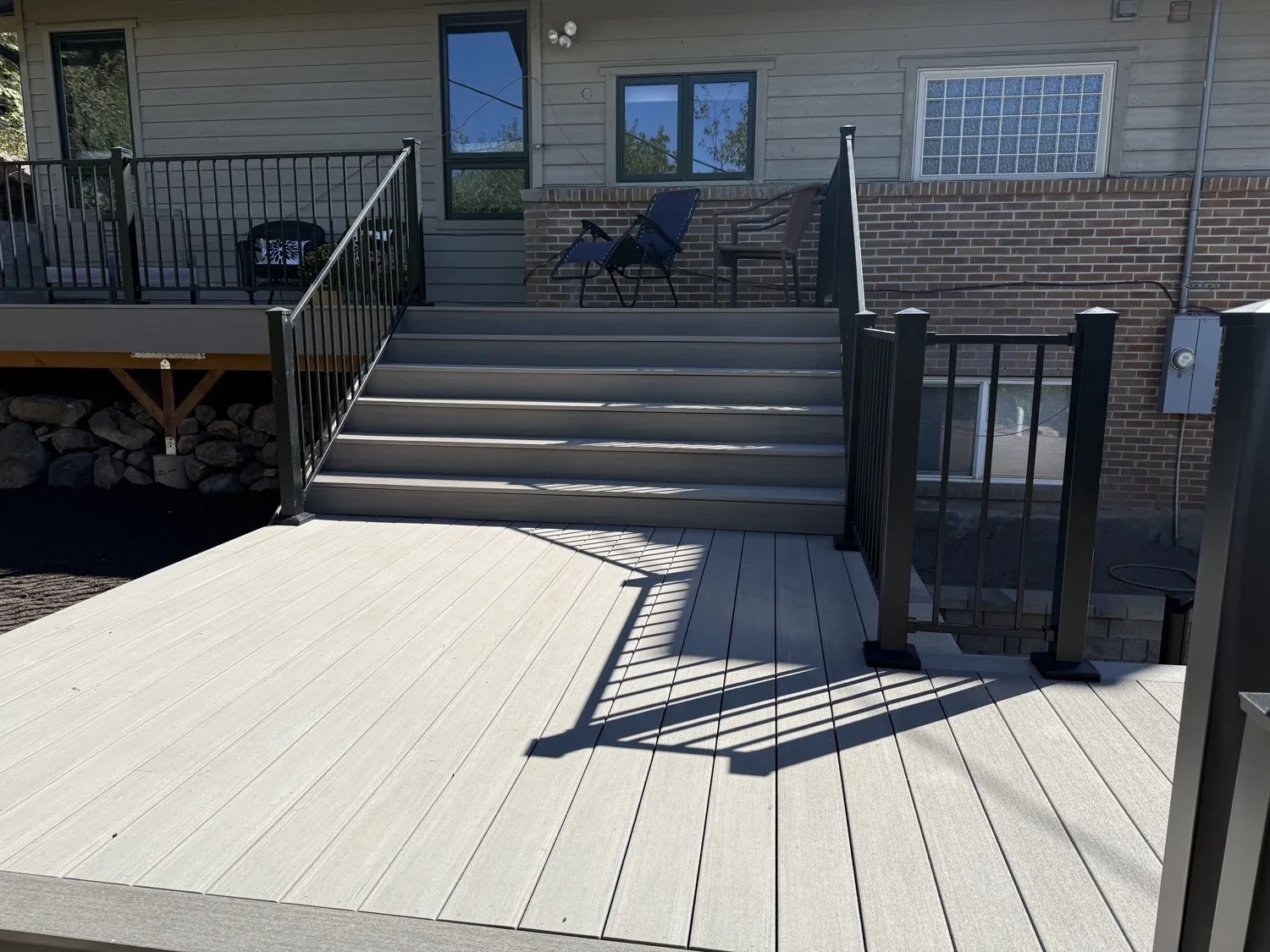
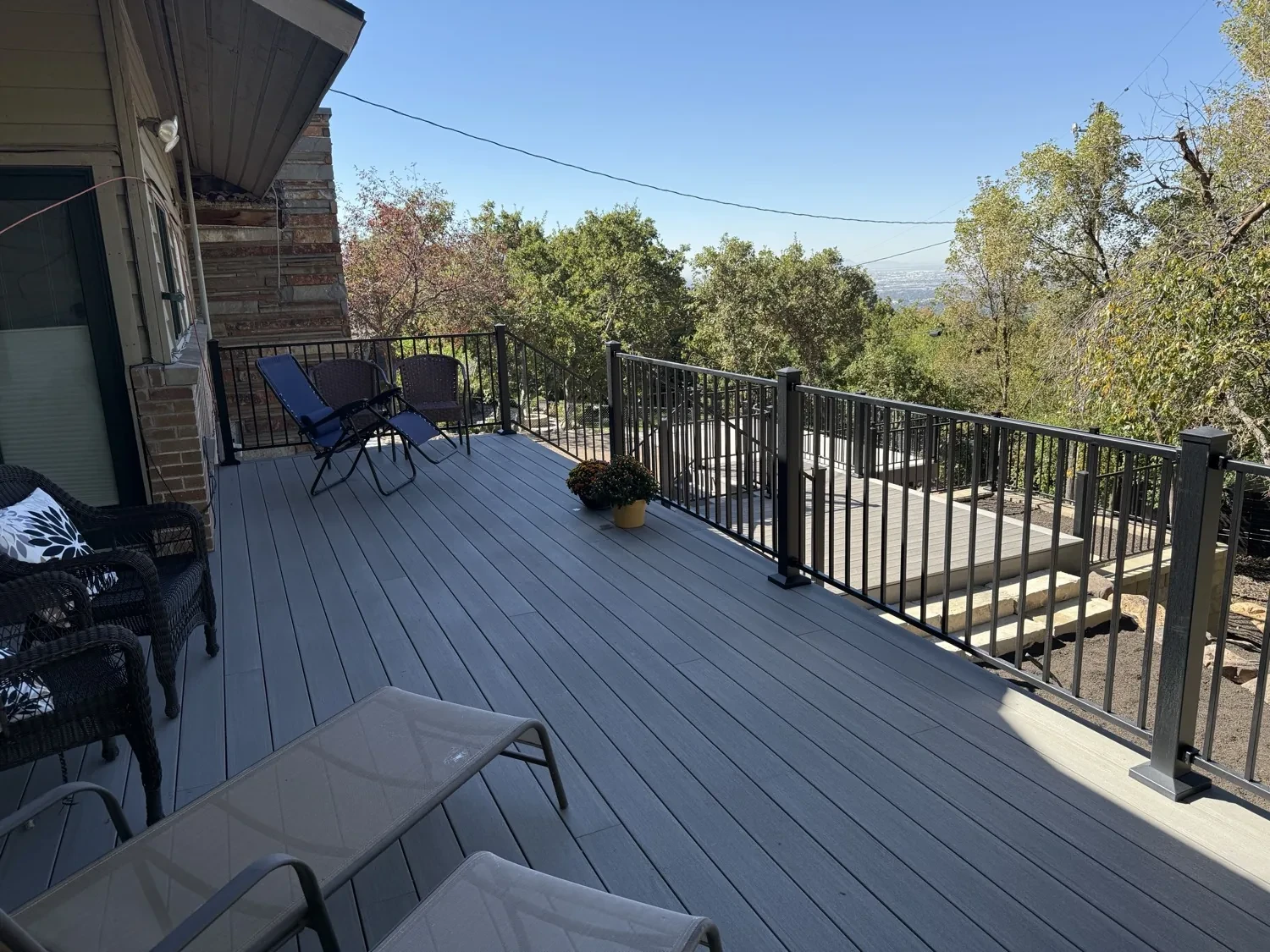
Advanced PVC — Millcreek
TimberTech Vintage Coastline
A hillside renovation with a multi-level deck system integrated into a Belgard Steeplecrest retaining wall. Advanced PVC was specified for the moisture exposure and hillside application.
See the Millcreek project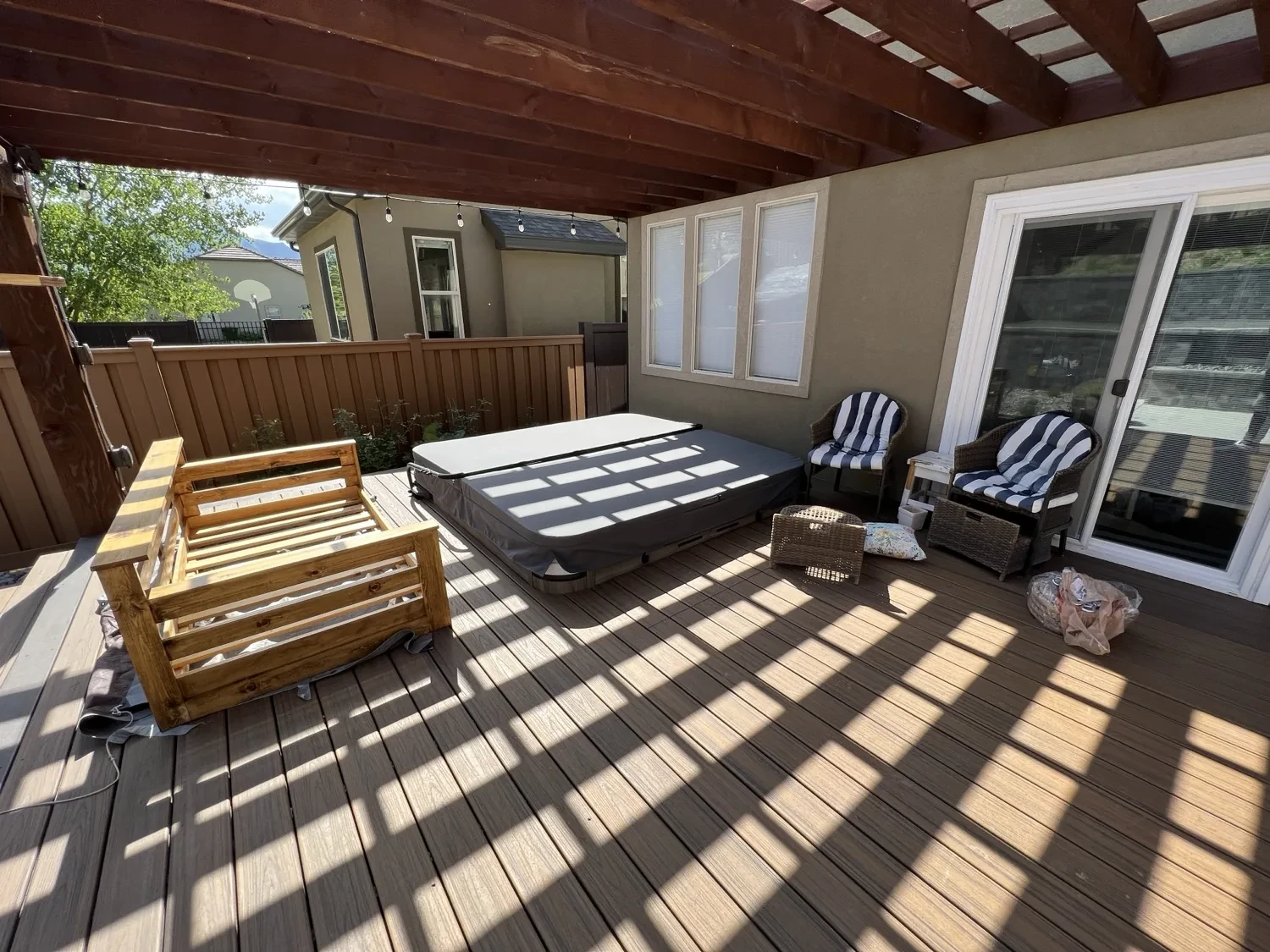
Composite — Draper
Trex Transcend Havana Gold + Spiced Rum
A hillside outdoor-living project with a Trex composite deck integrated with a cedar pergola and hot tub. Two Transcend colors used — Havana Gold for the field, Spiced Rum for stairs and border.
See the Draper projectPlan your deck before you call
The Deck Planner walks through size, features, and material preference in 5 steps — then hands off to a quote request.