
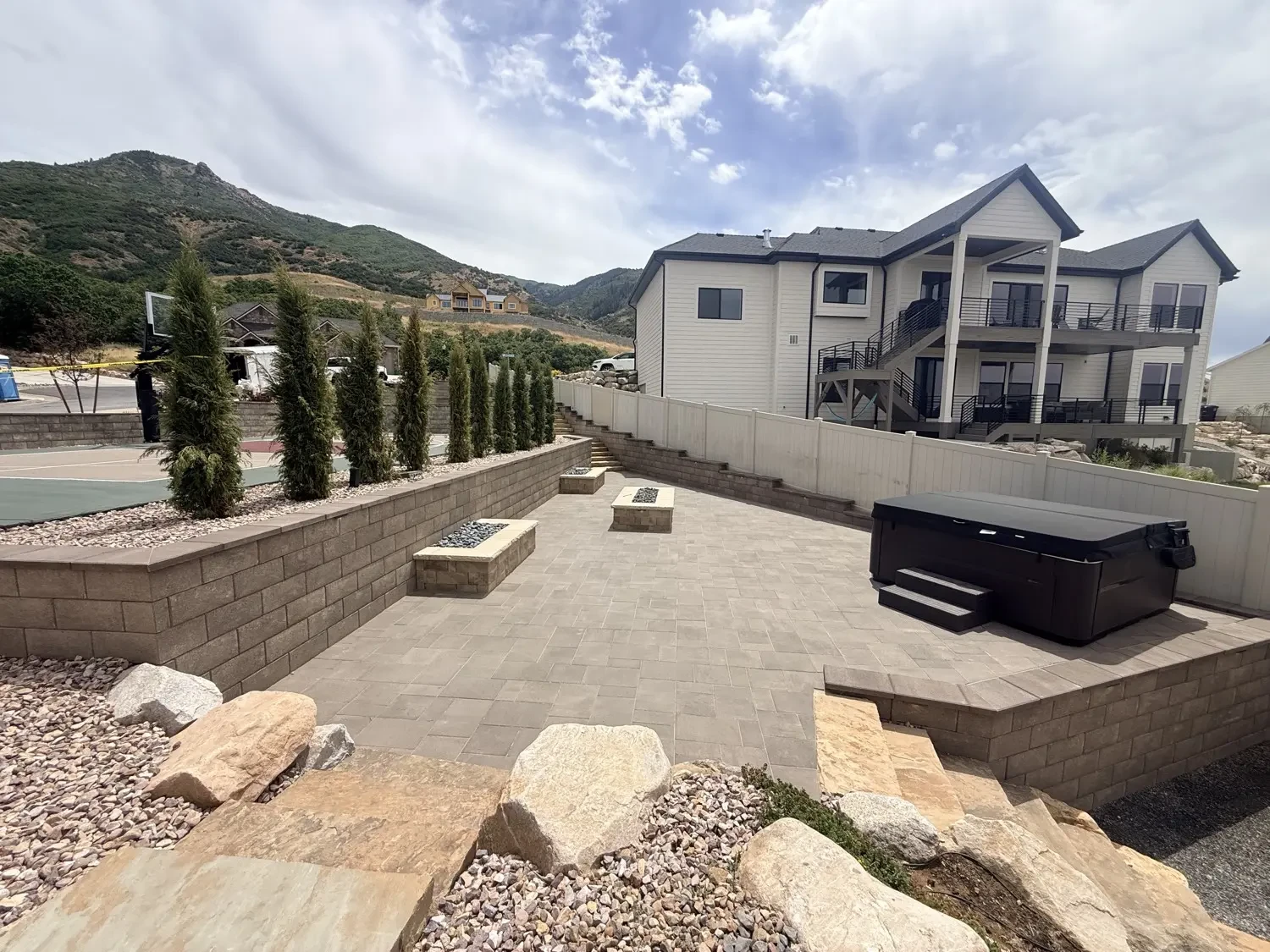
What WUI means for Utah deck projects
Utah's wildland-urban interface — the zone where developed residential areas meet undeveloped wildland — covers a significant portion of the Wasatch Front foothills and bench communities. Properties in designated WUI zones are subject to building codes that restrict or prohibit combustible exterior materials, including decking.
WUI compliance requirements vary by jurisdiction and are enforced at the permit level. If your property is in a WUI zone, the decking material you choose must meet the fire-resistance classification required by your local authority having jurisdiction (AHJ). This is not a preference — it is a code requirement that affects permit approval.
Even for properties outside formally designated WUI zones, fire-resistance performance is a reasonable consideration for any hillside or foothill property in Utah. The fire environment in the Wasatch Front is real, and the material choices you make at the time of construction are difficult to change later.
Fire ratings — what Class A, B, and C mean
Decking fire ratings are tested and classified under ASTM E84 (surface burning characteristics) and, for WUI applications, under ASTM E2632 (brand resistance) and ASTM E2726 (deck board ignition). The classifications are:
- Class AHighest fire resistance. Required in most WUI zones. Resists ignition from burning brands and flame spread. Trex Transcend and TimberTech Advanced PVC collections carry Class A ratings.
- Class BModerate fire resistance. May be acceptable in some jurisdictions outside WUI zones. Not typically sufficient for WUI compliance.
- Class CLowest classification. Not suitable for WUI zones. Pressure-treated wood typically falls here.
Untreated wood decking is not classified and is not permitted in WUI zones. This is the primary reason composite and Advanced PVC decking are the standard specification for hillside and foothill properties in Utah.
Trex Transcend — Class A composite
Trex Transcend carries a Class A fire rating and meets the WUI deck board requirements under California Building Code Chapter 7A, which is the most stringent WUI standard in the western United States and is referenced by many Utah jurisdictions.
Trex Transcend Lineage is the collection Black Diamond has installed on confirmed Utah projects, including Carmel at Layton. The Class A rating applies to the full Transcend line.
Trex Transcend Lineage also carries SunComfortable™ certification — relevant for Utah's high-altitude UV environment and the heat considerations that come with south- and west-facing hillside decks.
TimberTech Advanced PVC — Class A, no wood fiber
TimberTech's Advanced PVC collections — Vintage, Landmark, and Harvest+ — are fully synthetic with no wood fiber content. This construction eliminates the primary ignition pathway for composite decking: the wood fiber component.
All TimberTech Advanced PVC collections carry a Class A fire rating. TimberTech Vintage Coastline is the collection Black Diamond has installed on confirmed Utah projects, including the Millcreek hillside renovation.
For properties where WUI compliance is a hard requirement and moisture resistance is also a factor — spa decks, pool surrounds, or hillside properties with drainage challenges — Advanced PVC is often the more appropriate specification.
Framing and substructure — the rest of the fire equation
A Class A deck board on a combustible wood substructure is not a fully fire-resistant assembly. WUI compliance typically addresses the full deck assembly — boards, framing, and the space beneath the deck that can accumulate debris and act as a fuel source.
For WUI-compliant deck assemblies, the framing specification, the treatment of the space beneath the deck, and the connection to the house all matter. We discuss these as part of the deck planning scope for hillside and foothill properties.
If your property is in a designated WUI zone, confirm the full assembly requirements with your local building department before finalising the design. We work within those requirements — we do not design around them.
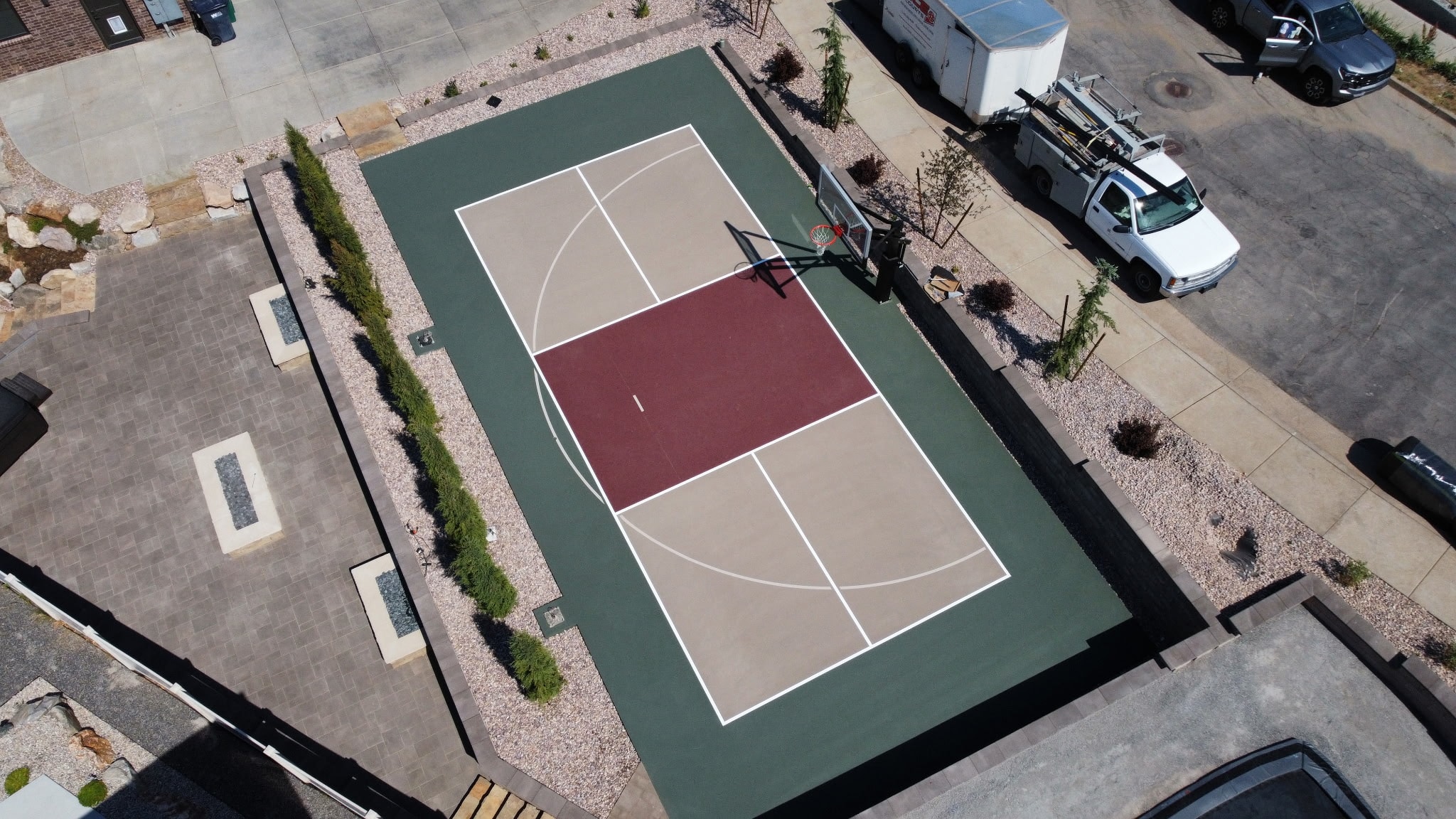
Installed example — Layton
Trex Transcend Lineage Carmel — hillside outdoor living
A hillside property in Layton with a sport court, spa, fire-water feature, and Trex Transcend Lineage Carmel deck. The Class A fire rating was a specification factor for this foothill location.
See the Layton projectPlanning a deck on a hillside or foothill property?
The Deck Planner includes a WUI/fire-zone question — include it from the start so the material specification can account for it.