
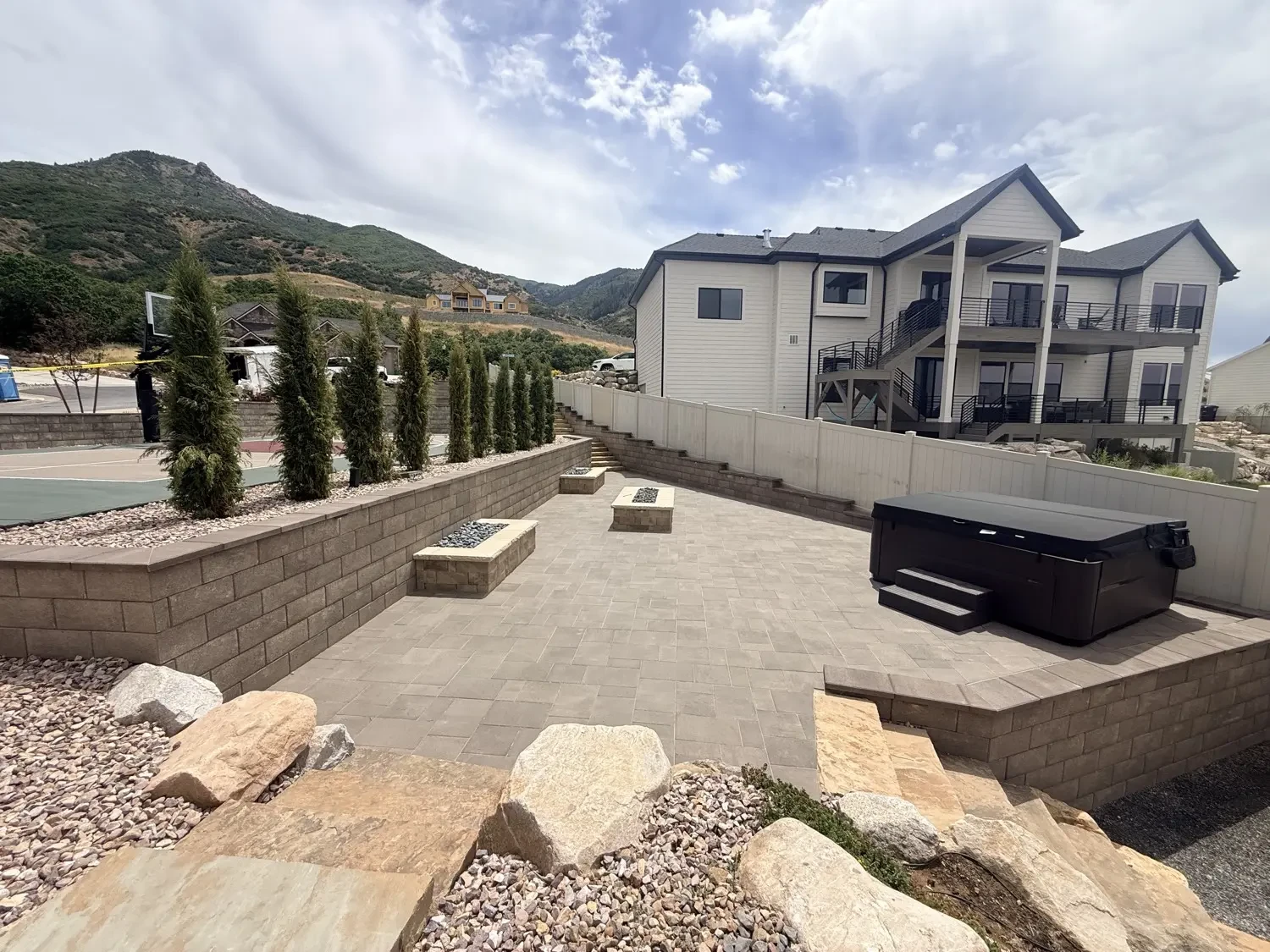
Heat — the first filter for Utah
In Utah's high-altitude, high-UV environment, darker composite colors absorb significantly more solar energy than lighter ones. A dark espresso or charcoal board on a south- or west-facing deck can reach surface temperatures that make barefoot use uncomfortable in summer.
This does not mean dark colors are wrong — it means the orientation and shade conditions of the deck matter when choosing a color. A shaded north-facing deck can comfortably carry a darker color. An exposed south-facing deck in a foothill community benefits from a lighter or mid-tone color, or from a SunComfortable™ certified product.
Trex Transcend Lineage carries SunComfortable™ certification, which means the boards are engineered to stay cooler than standard composite at the same color. This is a meaningful differentiator for exposed Utah decks, particularly in the lighter and mid-tone range where the technology is most effective.
Fade resistance — what Utah's UV does to color
Utah's elevation and dry climate produce UV exposure levels that are meaningfully higher than lower-altitude environments. Composite decking that performs well in coastal or Midwest climates may fade faster in Utah.
Both Trex Transcend and TimberTech Vintage carry fade warranties — Trex at 25 years, TimberTech Advanced PVC at 30 years. These warranties cover fade beyond a defined threshold, not all visible color change. The cap-stock construction on both products is the primary fade-resistance mechanism.
Lighter colors show less visible fade over time than darker colors, even when the absolute fade amount is similar. This is a practical consideration for long-term appearance, not just a warranty question.
The Utah landscape palette
The Wasatch Front landscape is warm — sandstone, sage, ochre, and the warm grey of granite. Decking colors that read as warm mid-tones tend to integrate well with Utah's natural environment and with the earth-tone exterior palettes common on Wasatch Front homes.
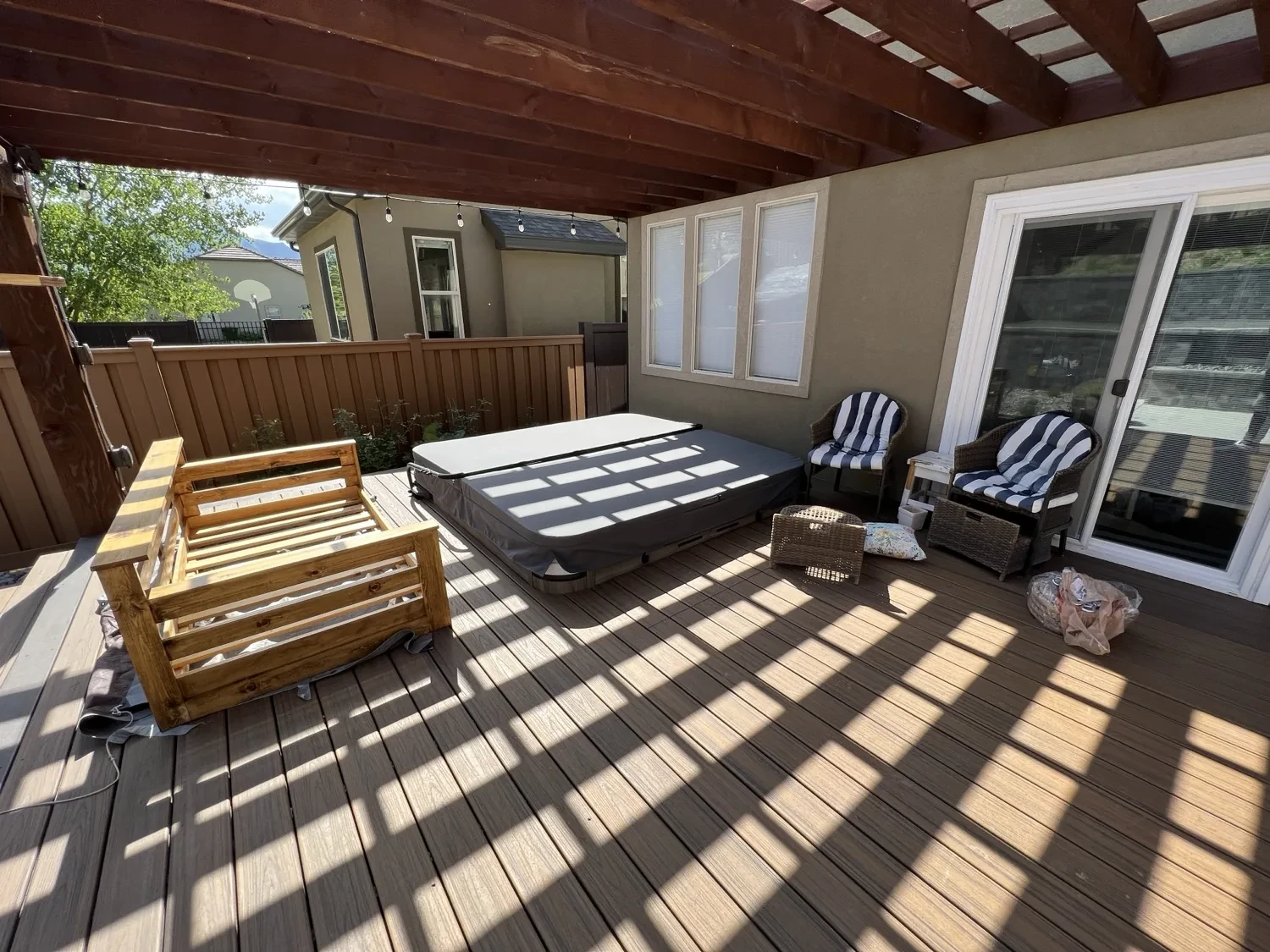
Carmel (Trex Transcend Lineage) is a warm mid-tone that works well with the Utah landscape palette. Havana Gold (Trex Transcend) is a warmer amber that reads as a natural wood tone. Both have been installed on Black Diamond projects in Utah.
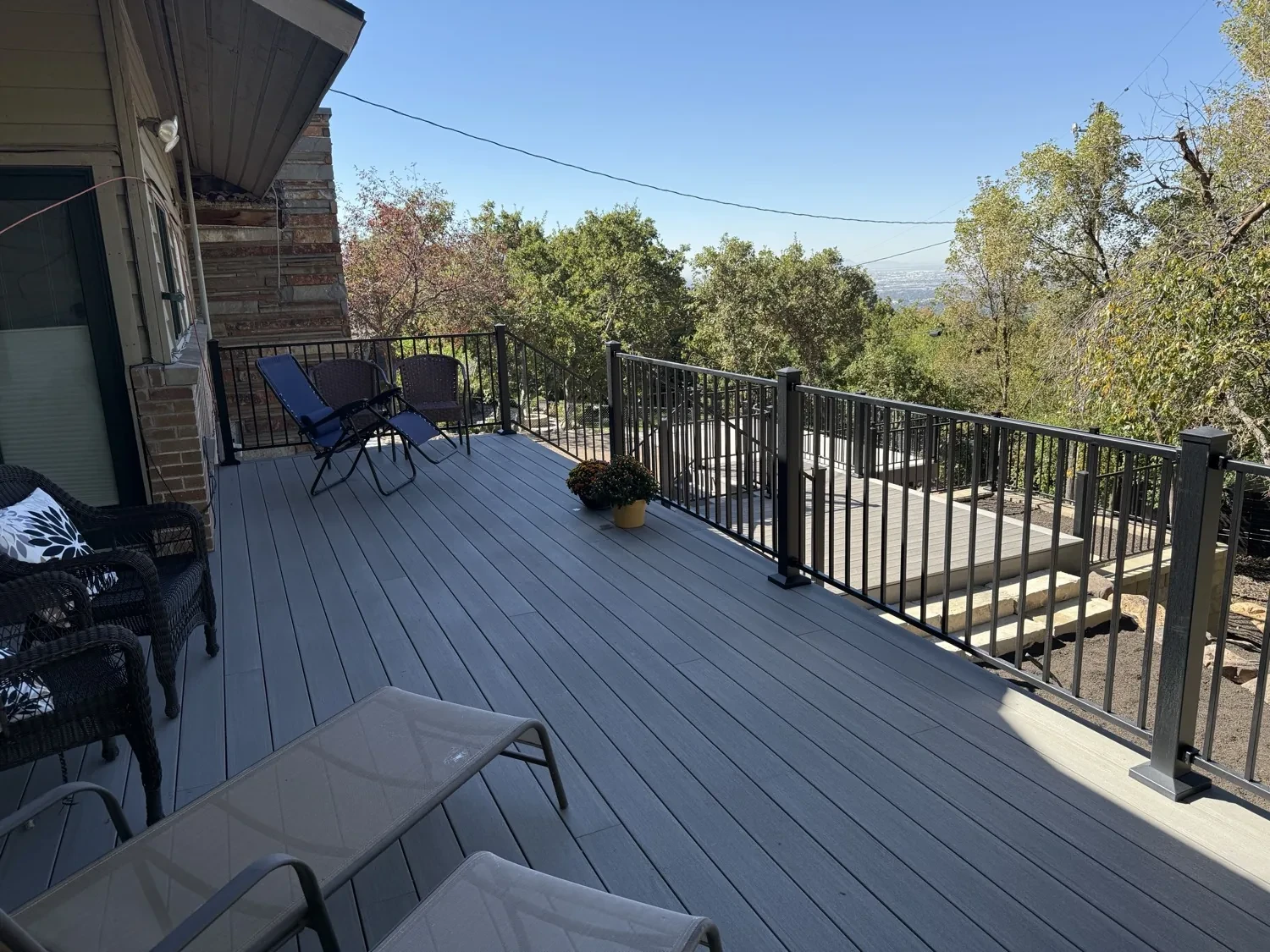
Cooler grey tones — like Coastline (TimberTech Vintage) — work well with contemporary or modern exterior palettes and with homes that have cooler stone or stucco finishes. The right choice depends on the house and the design direction, not a universal rule about Utah.
Coordinating with the house
The deck is visually connected to the house — the siding, trim, and roofline are all in the frame when you look at the deck from the yard. A color that works well in isolation may not work well against the specific house it is attached to.
The general principle is contrast without conflict. A warm-toned house benefits from a deck color that is either harmonious (another warm tone) or clearly contrasting (a cool grey). A mid-tone deck on a mid-tone house can read as muddy.
Railing color matters as much as board color. A white or light railing against a dark board creates a strong visual frame. A black railing against a warm mid-tone board reads as more contemporary. We discuss railing and board color together as part of the deck design scope.
Ready to explore colors for your project?
The Deck Planner walks through orientation, shade, and design direction — and shows you the colors that fit your scope.